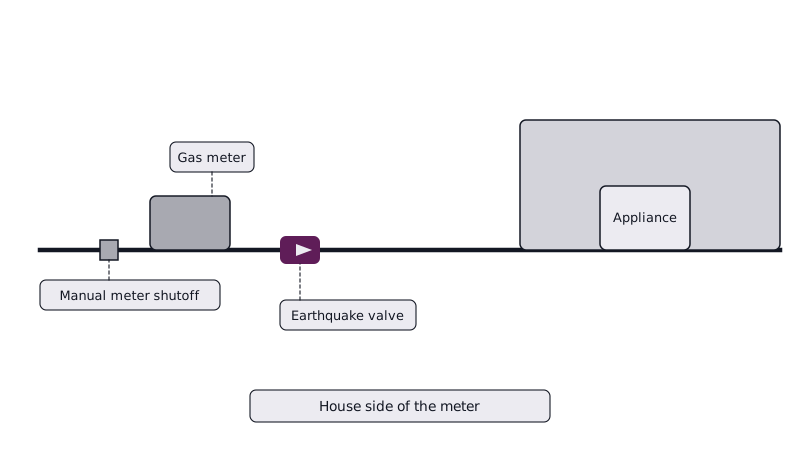
A plumbing contractor fits a seismic gas valve on the house side of the meter, past the point where the utility's equipment ends. The gas is turned off first, a leak test follows, and a permit is usually involved. Homeowners should not attempt it, since gas piping falls under regulated work. Your part is to choose a type, check approval and prepare the site. The gas line plumber page gives a broader view.
The valve closes automatically when it senses strong ground shaking, so a ruptured line or a toppled water heater does not keep feeding gas into the house. Murrieta, Wildomar and the Santa Rosa Plateau edge all sit in an earthquake region, so the question comes up often. The notes below describe how an install goes, in plain order.
What does an installation actually involve?
The plumber shuts the gas off at the meter, cuts into the house line just after the meter outlet, fits the valve with the arrow pointing the way the gas flows, pressure tests the fittings, restores gas, relights appliances, and checks the valve is level and set. Most of the labor is the cut, the fitting and the leak test.
Order of steps a contractor follows:
- Confirm the valve model is on the state's approved list and fits your pipe size.
- Pull any needed permit with the city or county.
- Shut off the gas, vent the line, and cut in.
- Install the valve level, tighten and test for leaks with a tester or approved solution.
- Restore gas and relight pilot lights on appliances.
- Schedule inspection if the permit calls for one.
Many houses have exposed black iron or flexible pipe at the meter, which makes access easy. Tight meter boxes or stucco work close to the meter add time.
Why shouldn't I install it myself?
A poor joint in gas piping can leak, and the work is regulated. California rules call for a contractor license if a permit applies, and as a rule also when labor and materials together reach $1,000 or higher. A homeowner may legally work on a home they live in in some cases, but gas work is where inspectors and utilities draw a hard line. Skip it.
A valve fitted backward or cross-threaded may not close when it must, or may leak while you sleep. The risk sits far above the saving.
If you ever smell gas, leave the house before doing anything else. From a safe spot outdoors, use the SoCalGas line, 1-800-427-2200, and call 911 when anyone is in danger. In San Diego County areas such as Fallbrook, Rainbow and De Luz, your gas company may be a different utility, so check your bill. Never flip a switch or use a phone inside.
Which kinds of valve exist, and how do I choose?
There are mechanical valves with a ball that drops into a seat when shaken, and electronic ones with a sensor. Some sit at the meter, others fit inside the house line. Excess flow valves look similar but respond to a burst line, not to shaking. A seismic valve is what people mean here.
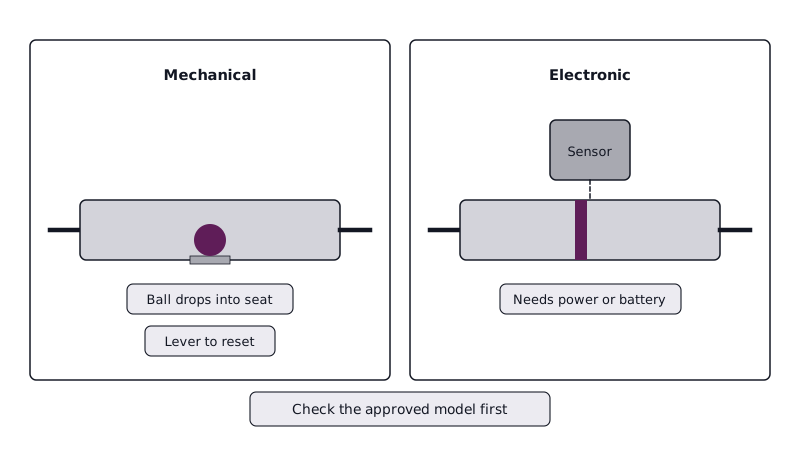
Your choice depends on the model's approval for your use, the pipe size, and where it goes. Ask the contractor to name the make and model and give you the approval details; do not buy a valve online and then ask someone to fit it, because the approval and warranty may not apply.
A mechanical valve needs a reset after it trips, and you or the plumber lifts a small lever. Electronic types have power or battery needs. Neither type replaces the main shutoff handle at the meter, which you should know how to find.
Does the work need a permit, and who obtains it?
Generally, yes, for new gas piping and for work in the gas line, though the details depend on the office. In Murrieta, contact City of Murrieta Building and Safety at 951-461-6062. In Wildomar, permits are issued at the Building and Safety counter of the city. In French Valley, Winchester and Lakeland Village, Riverside County handles them, and county contacts should be confirmed before you call.
Ask what the office requires for a valve alone. Some jurisdictions treat a valve swap as a minor permit, others want a drawing. Your contractor usually pulls the permit and sets up inspection; it is part of the quote.
You will find sources for these offices at the bottom of the page. Fallbrook, Rainbow and De Luz fall under San Diego County rules; confirm with the county's building office before you plan.
What details should I gather ahead of getting a quote?
Work out where your meter is, roughly what size the pipe is, how old the house is, how many gas appliances it has, and whether the meter sits in a tight box or behind a block wall. Pictures of the meter and its piping help. Mention if you rent or own, because a landlord may need to approve.
Having those details, a local plumber can tell you what the job involves in a single call. The quote should name the valve model, the labor, permit costs and any extra work like a pipe change. This page carries no price, because there is no sourced figure for Murrieta. For what changes the number, see gas line costs.
Also read about emergency gas shut-off valves and residential gas piping codes for the rules a plumber works under.
How does a request get to a plumber?
When you send the form below, we pass your details to a plumbing business in the area. That business pays this site a fee for being introduced, then visits, quotes and does the work; we do nothing beyond forwarding the request. Turning down a quote is entirely your choice.
The page on who may work on gas piping explains what California requires of anyone working on gas piping. Someone answers the phone line on weekdays from 9am until 5pm. If you are comparing services, begin at the Murrieta Creek Plumbing home page.
Common questions
How do I know the valve has tripped after a quake?
If gas appliances stop and there is no gas smell, the valve may have closed. Mechanical valves usually show a visible indicator or a lever that has dropped. Do not relight anything yourself. Call a plumber or the gas utility, who can check for leaks before restoring gas.
Does the valve replace the main shutoff?
No. The meter shutoff is a manual valve beside the meter, and a wrench turns it. An earthquake valve is an automatic extra layer. Locate the main shutoff, keep a wrench close to it, and leave it open unless there is a leak or a utility tells you to close it.
Can it be installed in any house?
Most houses with gas meters can take one, but the pipe size, space and approved models matter. Tight meters, unusual pipe materials or mobile homes may need special fittings. A contractor can confirm this once they have seen the meter, so photos help.
Will it prevent every gas leak?
No. It closes in strong shaking, but a slow leak from a worn appliance connector will not trigger it. Keep appliances serviced, know the smell of the odorant added to natural gas, and act at once, without waiting, when you notice that smell.
How much time should I set aside for the installation?
A straightforward meter-side valve is generally a short visit, though permit and inspection timing can stretch the calendar. The shutoff of your gas during the work also means appliances are off briefly, so pick a day when you can be home to relight pilots.
Last changed