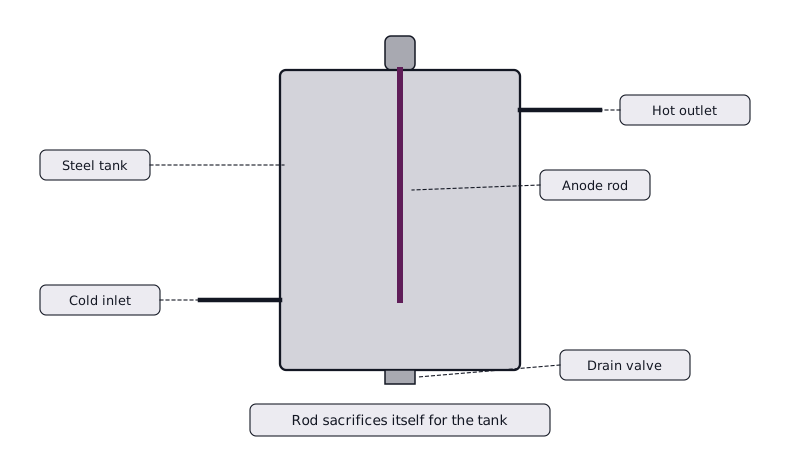
An anode rod is a metal stick hung inside a tank water heater so that corrosion goes after it and spares the steel tank. Once it is eaten down to the core, the tank is next. Replacing a worn rod is a small repair next to buying a new heater, and it sits among the jobs on our water heater repair page.
What is the anode rod's job?
It is a sacrificial part. The rod, usually magnesium or aluminum around a steel core, reacts more readily than the steel tank, so the dissolved minerals and oxygen in hot water corrode the rod first. While some rod remains, the tank lining is protected. When it is gone, rust starts on the tank wall.
That is why the rod matters in hard-water areas like the Inland Empire. Third-party estimates typically rate the water around Murrieta as moderately hard to hard, and harder water tends to use the rod up sooner. For your own address, read the water quality report from your district, or use an inexpensive test strip.
What shows that the anode rod is due for replacement?
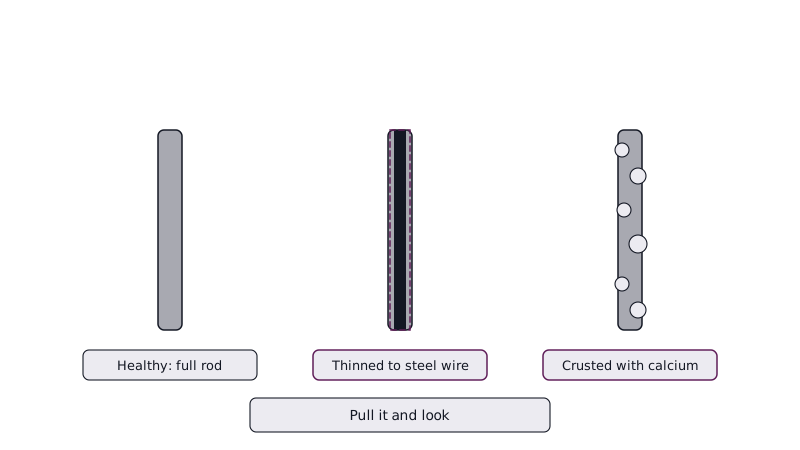
Pull it out and look. A rod thinned to the steel wire, or coated in heavy calcium so it resembles chalk, is finished. Warning signs from the heater include popping or rumbling sounds, rusty or discolored hot water, a rotten-egg smell in the hot tap and, in older tanks, small leaks at the base.
Manufacturers often suggest checking the rod every few years, and they differ on timing, so follow the label on your heater. Do the check before the tank is ten or so years old; after that, the steel may already be damaged and the rod will not save it. Where the heater is already old, read heater lifespan and replacement timing first, before you spend anything.
Can I swap the anode rod on my own?
Plenty of handy owners do, but it calls for the right tools and care. You need a socket (often 1-1/16 inch) with a breaker bar, headroom above the tank or a flexible rod, thread tape and a drain hose. Gas and electric heaters differ. Should the fitting be seized, or if you smell gas, stop and phone a plumber.
The sequence in outline:
- Turn the heater to off or pilot, and on an electric unit trip the breaker.
- Close the cold supply and run a hot tap somewhere in the house.
- Drain a few gallons through the drain valve, until the level falls below the rod.
- Break the rod loose with the breaker bar. It is usually stuck hard.
- Fit the new rod with thread tape, refill the tank while keeping a hot tap open until water runs steadily, then restore power or the pilot.
Do not relight a gas pilot you are unsure about. Gas piping is contractor work, and a gas smell means leaving the house and reaching the SoCalGas line, 1-800-427-2200, from outdoors.
When should you bring in a plumber?
Phone one when the rod refuses to budge, there is no space to pull it, the tank is old, or you are unsure about the gas or electrical side. A plumber also notices what else needs attention, such as the relief valve, the dip tube or a failing thermostat, and can say honestly if the tank is past saving.
Not every plumber stocks or fits rods, so mention it when you request. If the heater is leaking from the tank body, a new rod will not stop it; see water heater leak repair. For a tank that is finished, read replacing a water heater.
What are the choices: magnesium, aluminum or powered rods?
Magnesium rods protect well but may give off a rotten-egg smell in some water. Aluminum or zinc-alloy rods suit smelly water and are common in hard water. Powered anodes use a small electrical current, are costlier, and do not wear out the same way. The label on the heater and the plumber should guide the pick.
Each material involves a trade-off, and the manual for your heater may list the kinds it permits. Whatever rod you buy, check that it fits the thread and the length of your tank.
Does an anode rod change the warranty or cost?
A few heater makers demand that the rod be checked or replaced to keep a warranty, while others do not. Read your heater's paperwork. Because a rod is a small part, the cost is a fraction of a new heater, but we have no verified local price, and the plumber's quote will say what labor adds.
For the bigger picture on what a replacement tank costs, see water heater replacement cost. In California, swapping a whole water heater typically needs a permit, but replacing an anode rod does not.
Common questions
What is the right interval for checking the anode rod?
Many guides say every few years, and manufacturers' manuals vary, so follow the one for your heater. Hard water shortens the interval, and a rod that looks fine at one check may be nearly gone by the next. Checking early costs little compared with losing the tank.
Will a new rod stop a leaking tank?
No. When water leaks from the tank body itself, the steel has already rusted through, and nothing inside can seal it. A rod protects a healthy tank; it does not repair a damaged one. Plan on replacing the whole heater, and turn off the supply to it meanwhile.
Is a water softener bad for the rod?
According to some heater makers, softened water uses up a rod faster than untreated water does. That is a reason to inspect the rod more often, not a reason to skip softening if you want it. Ask the installer, and read the heater manual for the maker's own advice on softened supplies.
Can I do it if my heater is tankless?
There is nothing to swap, because tankless heaters do not have an anode rod. The matching upkeep is flushing scale out of the heat exchanger on a regular schedule. See tankless service and repair for what that visit involves and when it falls due.
The rest of our guides start from plumber murrieta.
Last changed