Weak water pressure usually traces back to a handful of repeat causes. These include a valve that is only part open, a clogged aerator or showerhead, scale inside old pipes, a regulator on its way out, a hidden leak, or a supply problem outside the house. Test one tap and then every tap. That one comparison shows whether to clean a fixture or call a plumber. Murrieta Creek Plumbing arranges other jobs too, and the home page lists them.
What can you do about low water pressure at home?
Start at the tap and work outward. Unscrew the faucet aerator and soak it in vinegar, look over the showerhead for scale buildup, and confirm that the valves beneath the sink are open all the way. A single weak fixture with healthy neighbors points to a fault at that fixture. Weakness everywhere points upstream.
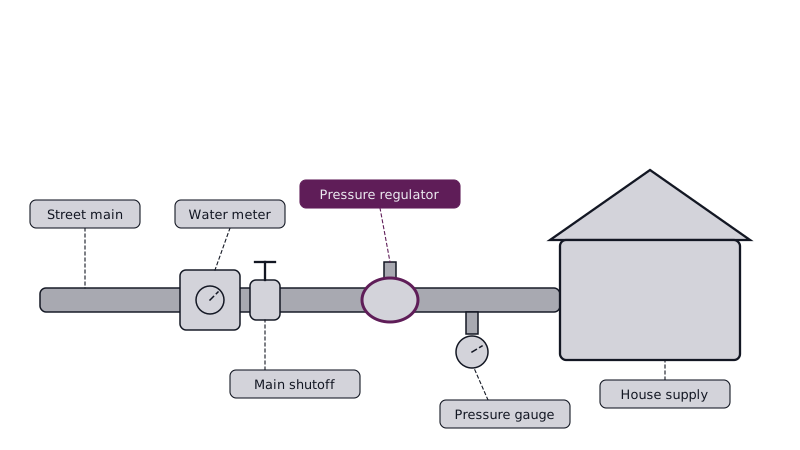
If every fixture is weak, find the main shutoff, which is often by the front hose bib or inside the garage, and make sure the handle is open all the way. Next check the pressure regulator, a bell-like brass valve close to the spot at which the line comes into the house. A cheap screw-on gauge from a hardware store, fitted to a hose bib, gives you a real number instead of a feeling.
What is a normal water pressure for a house?
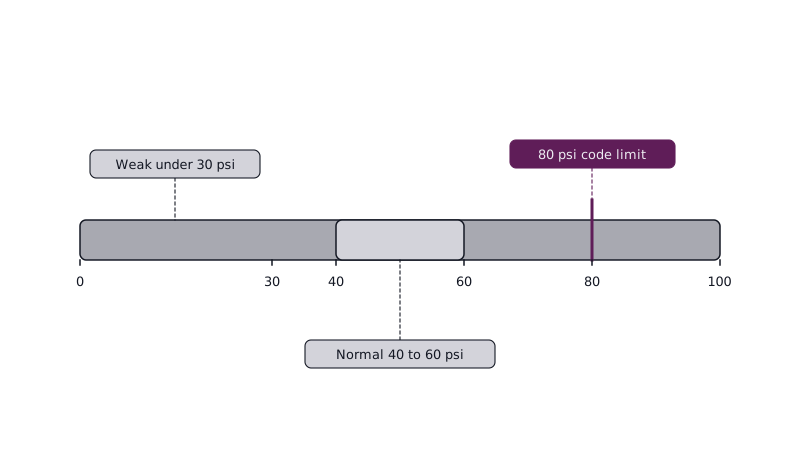
Most homes do well between about 40 and 60 psi. The maximum under the plumbing code is 80 psi, which is why a regulator is needed wherever the street supply runs higher. Under roughly 30 psi you will feel it in the shower and when two fixtures run at once.
Only a gauge reading will tell you for sure. Measure first thing in the morning, while neighbors are not drawing water, and once more in the evening. A large swing between the two suggests the supply is the issue rather than your pipes. Lots on a slope can see more variation than flat ones.
Where is the water pressure regulator valve?
Begin where the water line enters the property: the garage wall, a box in the front yard, next to the water heater, or an outside wall by the hose bib. The target is a bell-shaped brass fitting with a locknut and adjusting screw on top, placed right after the main shutoff.
Not every home has one. Some Murrieta-area homes sit on low-pressure supply and never needed it, and on some rural lots served by a well, a pressure tank and switch do the same job in a different way. Our guide to where a pressure regulator is located has pictures of what to look for, and a separate page covers the common size, the 3/4 inch regulator valve.
What is a pressure regulator for?
Supply pressure in the street can run far above what household pipes, hoses, washing machine valves and a water heater are built for. A regulator trims it to a safe level so supply lines do not burst, toilet fill valves do not hiss and appliances last longer.
It also fails in the opposite direction: a dying regulator can choke flow to a trickle, which makes it a frequent reason for sudden low pressure throughout the house. If pressure dropped overnight, work through sudden low water pressure before replacing anything.
Is regulator adjustment a DIY task?
In many homes, yes. Free the locknut first. Then turn the adjusting screw a quarter turn at a time, clockwise to raise pressure on most models, and check the gauge after each turn. Tighten the locknut again at the end. Stay under 80 psi, and recheck an hour later.
Quit if the setting will not hold or the gauge climbs overnight. Either one signals a failing seat, and replacing the regulator is plumber work. The full procedure sits in the regulator adjustment guide. Replacement is covered on the regulator replacement page.
What are the less obvious causes of low pressure?
A hidden leak steals flow before it gets to the taps. Look at the meter. Turn everything off and note the number, then wait two hours without using any water and read it again. If the number has moved, water is escaping somewhere. The EPA puts the waste from a typical home's leaks at upward of 9,300 gallons per year.
Other causes include galvanized steel pipe narrowed by corrosion in older houses, a partly closed meter valve after work on the street, a clogged water softener or filter, and a failing water heater inlet. Cold snaps can also make a weak line slower. When a single shower is the problem, see low shower pressure or a weak kitchen sink.
When is a plumber necessary?
Call one if the hose bib gauge reads over 80 psi or under about 30 psi, if a regulator cannot hold its setting, if the meter still moves with everything off, or if pressure drops after pipe work. Cleaning an aerator does not need a plumber.
Replacing a regulator and fixing any leak on supply lines are plumber work. Bigger jobs, repiping included, can require a permit from the City of Murrieta Building and Safety Division, the City of Wildomar or the county, depending on the house location. The plumber arranges that.
Common questions
Do plumbers fix leaks as part of a low pressure visit?
Yes. A plumber who finds the pressure loss is a leak will usually trace and repair it, or recommend leak detection if the pipe is hidden in a slab or wall. The visit starts with gauge and meter readings, so you see where the problem is before work is quoted. See the leak guide.
What will a new pressure regulator set me back?
Size, access and the position of the old valve, behind drywall or in a box, all play a part. We have no verified Murrieta price table to quote here, so we leave the numbers out. After looking at the setup, the local plumber writes up a quote, and our regulator installation cost page lists what moves the price.
Why do some plumbers push back on tankless water heaters?
Mostly because of gas line sizing, venting, scale and the higher purchase price, not because the units are bad. A tankless heater can make a home with weak pressure feel worse, since a lot of models must reach a minimum flow before they ignite. Ask the plumber about flow and gas supply before you commit, and read the tank versus tankless comparison.
How many hours does replacing a water heater take?
Swapping one heater for the same kind often takes half a day, though venting changes, code updates, new gas piping or a permit inspection can stretch it. Ask the plumber how the permit will be handled. For costs and options, read about what a new water heater costs.
Are sprinklers affected by low pressure?
Yes. Sprinkler heads need enough pressure to pop up and spray the right radius, so low pressure shows as weak or uneven coverage. Check the regulator and the backflow device on the irrigation line first. A plumber can test pressure at the irrigation valve and tell whether the house or the supply is at fault.
Who handles my request?
Your details arrive here, and we forward them to a nearby plumbing company that pays a fee for the lead and does the work under its own name. We do not run a plumbing crew. Begin at the quote page or read how it works.
Guides in this section
- 3/4 water pressure regulator
What a 3/4 inch water pressure regulator valve is, how to check your pressure, signs it is failing and what to ask a plumber before a…
- Water pressure and valves
Adjust a water pressure regulator valve step by step: gauge first, locknut, adjusting screw, the 80 psi limit, and when Murrieta homes…
- Sudden low water pressure
Pressure dropped overnight in your Murrieta home?
- Costs
What drives the cost to install or replace a water pressure regulator in Murrieta, how to compare quotes, and why we show no invented…
- Water pressure regulator replacement
Water pressure regulator replacement in Murrieta: signs yours has failed, how to read your pressure, what the swap involves, expansion…
- Water pressure and valves
Look for a brass bell-shaped valve on the main line near your shutoff.
- Water pressure and valves
Weak water pressure at one tap or the whole house?
References
Last changed