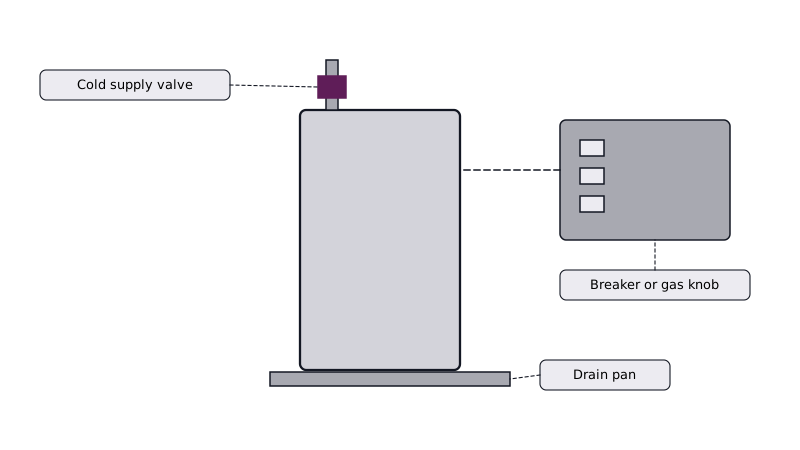
Begin by closing the cold water valve on top of the heater, cutting its electricity (or turning a gas unit to pilot or off), and mopping up. Next, find where the water starts: a pipe fitting, a valve, or the tank body itself. Fittings can be fixed. A tank that seeps from its seams is finished. The wider guide to water heaters covers repair and replacement.
What comes first when a water heater starts leaking?
Shut the cold supply valve that sits above the heater. On an electric unit, switch off the breaker; on gas, turn the control to off or pilot. If water keeps flowing, close the main shutoff where the supply enters the house. Then contain the water with towels and a bucket.
Keep clear of wet wiring. If the floor around an electric heater is flooded, do not wade in. Switch the breaker only if the panel is dry and you can get to it while staying out of the water; if not, call 911 or the electric utility.
Should there be a gas smell, leave the building, use the SoCalGas line, 1-800-427-2200, from outdoors, or call 911 when anyone is at risk. A leak combined with gas odor is an emergency.
Hot water from a leak can scald. Keep children and pets back, and let a leaking tank cool before you touch the pipes.
Which part is leaking, and is it fixable?
A drip from the side pipe is normally discharge from the T&P relief valve, caused either by excess pressure or by a worn valve. Water at the top connections means a loose or corroded fitting. When every pipe is dry yet water pools underneath, the tank has corroded through, and a new heater is the only cure.
A quick check, with a paper towel:
- Dry the top connections and pipes, then watch for a bead of water.
- Check the valve on the side and the pipe below it.
- Inspect the drain valve near the bottom of the tank; it may drip when its washer fails.
- Look at the base and the drain pan.
A relief valve that drips after hot water use can mean the thermal expansion has nowhere to go, which an expansion tank solves. Read about relief valve replacement and repairing a water heater leak.
Rust in the water and streaks on the tank's skin are signs the tank is nearing the end. Third-party estimates put Murrieta tap water in the moderately hard to hard range, and scale can speed up wear in a tank. Check your district's report.
When does replacing the heater beat repairing it?
If water seeps from the tank's seams, the base, or around the lower element, replace it. A tank is a steel shell lined with glass, and once the shell corrodes through, patching does not hold. Fittings, valves and elements are repairable, and the cost is far lower than a new unit.
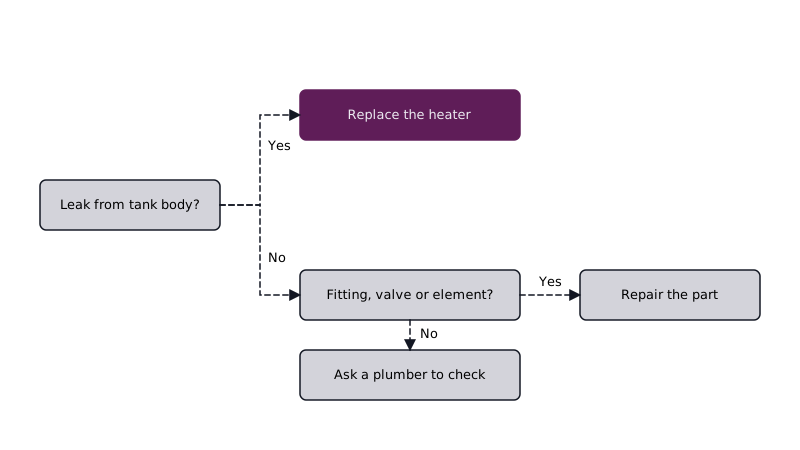
An age of about ten years or more with any leak at all makes replacement the sensible choice. Check the label for the date code. Our replacement cost guide lays out what a swap costs, and emergency repair options cover same-day situations.
In California, swapping a water heater generally takes a permit, and the new unit must be strapped against earthquakes. The plumber normally obtains the permit through the City of Murrieta, City of Wildomar or county building office, depending on where you live.
What if the water runs hot but the rooms stay cold, or the hot water is gone?
Hot water with no central heating means the water heater and the heating system are separate in your home, so the failure is in the heating system, a different trade. Complete loss of hot water suggests a tripped breaker, or a failed element or thermostat on an electric unit, or a pilot or thermocouple fault on a gas one.
Check the easy things before calling anyone: breaker, pilot light, gas valve, and the reset button on an electric heater. The thermocouple page and the one on a working heater with no hot water show what to look at.
When the pilot goes out again after two relights, stop. Gas appliance faults should go to a professional.
What does a tankless installation involve, and what do codes require?
A tankless unit needs a gas line sized for its higher burn rate, proper venting, a condensate drain for condensing models, a water connection with isolation valves, and a permit. A condensing model captures more heat and produces acidic condensate that has to drain safely. Install details vary by manufacturer, so the plumber follows the manual for your model.
The vent type and the gas line capacity are the usual surprises. A condensing unit can use plastic vent pipe, while a non-condensing one needs metal venting. A tank replacement often needs a larger gas supply when going tankless, which is why quotes jump. See natural gas tankless installation, the Rinnai install page and the tankless install price page.
Professional installation matters because gas piping, venting and permits fall under California contractor rules. Manufacturers' guides, including those for Rinnai, are free to read: ask for the one for your model so the quote matches. No zero-NOx water heater requirement applies today, because the regional air board decided in June 2025 not to change Rules 1111 and 1121.
You can send a quote request. It is forwarded to local plumbing businesses, which pay this site a fee for referrals; whichever business answers sets the price and does the work. The home page shows our other services.
Common questions
How fast does a leaking water heater need attention?
Same day. Shut off the supply immediately, and book a visit within a day or so. A slow drip can become a flood, and a tank that bursts can damage flooring and drywall. If the floor is wet and the unit is gas, treat gas smell as an emergency first.
Is it okay to keep running a leaking heater for a few days?
Only if the leak is tiny, you shut the supply when it is not needed, and the water is going into a drain pan. Tank leaks tend to get worse. If it is leaking at the tank, plan to replace it soon and avoid running it while you wait.
What does a plumber need to see before replacing it?
The label on the heater, the size, the fuel type, and photos of the area and venting. They check the gas line, vent, drain pan, shutoff valves and any code issues. With that information, they can quote more accurately, and a visit will confirm the details.
Will insurance pay for a leaking water heater?
Coverage depends on what your policy says, and on whether the damage came suddenly or built up through slow seepage over time. Read the policy wording or ask your insurer, and take dated photos of the heater and the wet area before you clean up. This site cannot give insurance advice, and none of this counts as a coverage opinion.
References
- General home plumbing practice and California code topics; no price figures on this page
Last changed