When the heater runs yet the water comes out cold, either the heat is not reaching the water or the hot water is not reaching you. A broken dip tube, a mis-set thermostat, a failed element, heavy sediment, a closed valve or a cross-connection in the plumbing are the usual causes. Sort the problem here, then use water heater repair for the right fix.
How can the heater be on and still give cold water?
The tank can be hot and the tap cold if the water mixes on the way out, or the tank may not be heating even though the unit appears on. Common causes: a failed heating element or gas control, a leaking mixing valve, a cross-connected faucet, or a broken dip tube that lets cold inlet water in high up in the tank.
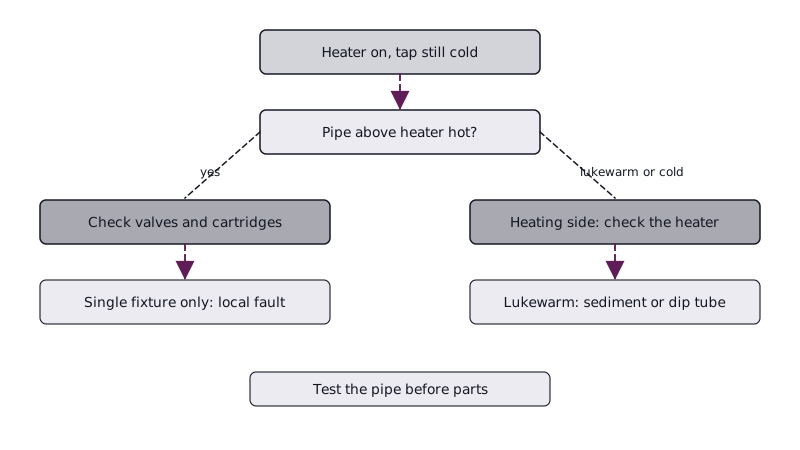
Begin by touching the hot pipe about a foot above the unit. A hot pipe with a cold tap means the fault is downstream: a closed valve, a bad cartridge or mixing valve, or a cross-connection. A pipe that is merely lukewarm means heating is the problem. Then check whether the shower or only the kitchen sink is affected; a single fixture means a local fault.
Is a broken dip tube the reason?
Cold water entering the tank is routed by the dip tube down to the base, where it gets warmed. If the tube cracks or breaks, cold water joins the mix high up, exactly where the hot outlet pulls from. Showers fade fast, water is lukewarm, and bits of white plastic may clog aerators. Older plastic tubes from certain years are known to fail early.
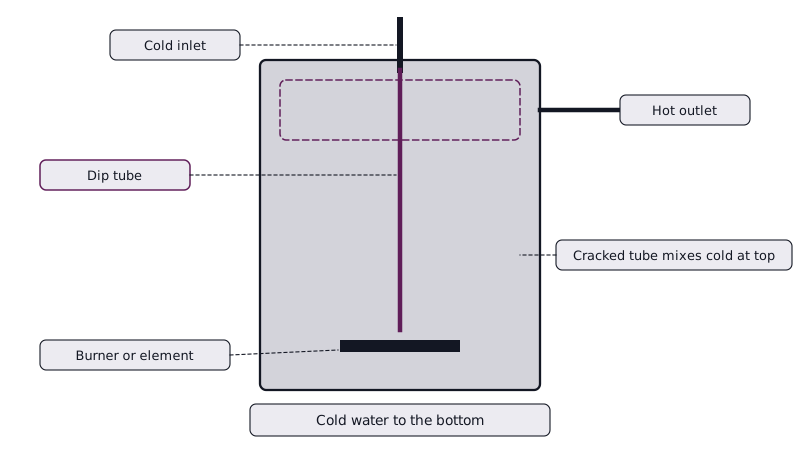
Look for small white plastic flakes in faucet screens or a washing machine inlet filter. Fixing it means draining the tank, removing the cold nipple and tube and installing a new one. That is a modest job, explained in dip tube replacement, and hot water returns afterward only if the dip tube was the true cause.
What if it is the thermostat, element or gas parts?
On an electric tank, a failed upper or lower element, a tripped high-limit button or a bad thermostat gives lukewarm or cold water while the breaker stays on. On a gas tank, a weak pilot flame, dirty burner or failed thermocouple makes the burner shut off. Test or replace these parts one at a time, with power or gas off.
Electric work is for people comfortable testing live circuits; switch the breaker off and verify with a tester before touching wires. The thermostat setting itself is worth checking first: a setting near 120 degrees Fahrenheit is common, and a setting that has been bumped down feels like a failure. Never raise it much higher to compensate, because hot water can scald quickly.
Gas models are covered in replacing a thermocouple, electric ones in replacement water heater elements. The owner's manual explains relighting a pilot. Gas valve or piping work is for a plumber: California treats gas piping as regulated work that needs a contractor license and often a permit.
If you smell gas, leave right away; from outside, use the SoCalGas line, 1-800-427-2200, and call 911 should you be in danger.
Can sediment or hard water cause it?
Yes. Scale and sediment collect on the tank floor and act as insulation between the burner or lower element and the water, so the heater works harder for less output. Third-party estimates put Murrieta tap water at about 6 to 11 grains per gallon, moderately hard to hard, so buildup can come faster than owners expect. Your district's water quality report gives the official figure.
A yearly drain through the hose bib at the bottom helps, as does checking the anode rod. Heavy sediment in an old tank may not flush out, and noisy popping or rumbling while heating is a clue. For the age question, read replacing the anode rod together with how long a heater lasts before it needs replacing.
What about only one faucet or shower having no hot water?
If only one fixture runs cold, look elsewhere than the heater. Typical causes are a clogged aerator or cartridge, a bad mixing valve, a stop valve shut or opened only partway, or a worn cartridge in a single-handle faucet. Supply lines swapped during a repair can do it too.
Try another tap: a hot kitchen with a cold bathroom points to a fixture problem. Pages for those cases: no hot water at one kitchen tap and shower with no hot water. For a general checklist, read the no-hot-water overview.
A cross-connection, where hot and cold lines are linked through a faulty single-handle valve or a mixing fixture, can let cold water flow into the hot line when one fixture is open. A few valve tests let a plumber track it down.
When is it time for a plumber, and what does the visit cover?
Reach out after you have checked power or gas, the thermostat and the simple valves and the problem remains, if the tank leaks, or whenever gas or major electrical work is involved. A plumber can test elements, thermostats, dip tube and gas parts, and quote a repair or replacement in writing before work.
Past about 10 to 15 years of tank age, replacement may be wiser than repair; the Department of Energy cites that range for storage tanks. Permits apply to replacement, and California requires the new tank be braced against earthquakes. Inside Murrieta, Building and Safety at city hall issues them, at 951-461-6062 (city page; confirm before calling).
When you send a request, Murrieta Creek Plumbing passes it to one nearby plumbing business; that business pays a fee for the introduction and gives the quote. For a failed heater with water on the floor, use emergency water heater repair. Otherwise submit the quote request and include the fuel type and tank age.
Common questions
Why is my hot water lukewarm instead of cold?
Lukewarm usually means partial heating: a tank full of sediment, a broken dip tube, a weak burner flame, or one dead element. Check the thermostat first, then the pilot or breaker. If the water cools fast in showers, suspect the dip tube or an undersized heater.
Could a tripped breaker be the problem?
Yes, on an electric heater. Check the dedicated breaker, then, with power cut, press the red reset on the top thermostat. If the breaker or reset trips again, do not keep resetting it. Something is shorted or overheating, and it needs a proper test.
Is a cold-water-only problem after a plumber visit normal?
Not normal. After work on pipes, trapped air or a closed valve can leave a line without hot water, and a swapped hot and cold connection at a faucet can too. Open the faucet slowly and run it a minute to purge air. If it persists, call the business back.
How long should the heater take to heat water?
After heavy use, a standard tank commonly needs an hour or longer to recover, and gas is faster than electric. If recovery runs far past what you are used to, scale, a weak element or burner, or an undersized tank may be the reason. Describe the change when you call.
Is it safe to drain the tank myself?
Yes, with care. Turn off power or gas, let the water cool, attach a hose, open the drain valve, and crack open a hot tap so air can get in. The water can scald, so wait. Should the valve stick or leak, stop and call.
Last changed