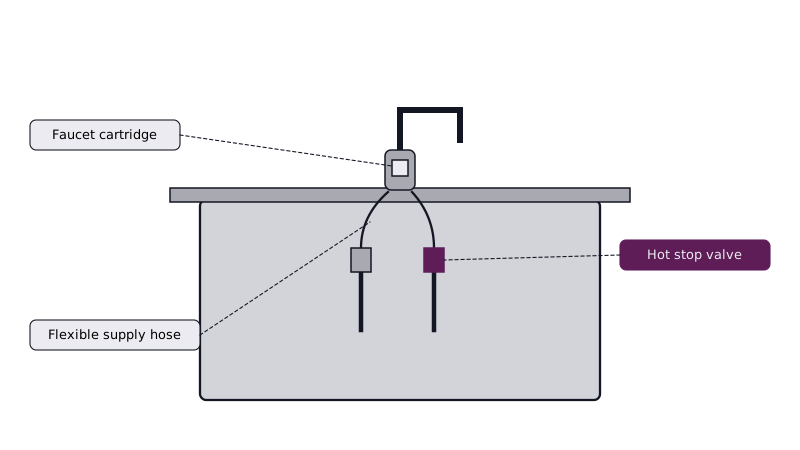
Start by testing the bathroom. If it runs hot, the heater is working, so the trouble lies with the kitchen faucet or the line feeding it. When all taps are cold, turn your attention to the heater. Most kitchen-only faults come from the faucet cartridge, the hot stop valve beneath the sink, or a pinched supply hose. The main page on water heater problems covers the whole-house version.
What leaves just the kitchen sink without hot water?
A fault confined to one faucet is local. The usual suspects are grit clogging the hot-water port in the faucet cartridge, a hot supply valve under the cabinet that is partly or fully closed, a bent or crushed supply hose, a clogged aerator, or an old gate valve that no longer opens. The heater and main lines are fine.
Loose debris often turns up once plumbing work has been done or the main water has been shut off. Sand, scale and flakes of pipe lining travel to the first fixture they reach, and a small cartridge opening plugs.
Scale from hard water can accumulate inside cartridges as well. Third-party estimates generally rate Murrieta tap water as moderately hard to hard, and the district's report for your address gives a figure.
Another cause is a cartridge that has worn and now mixes hot and cold wrongly, so the handle gives cold in any position. That one needs a replacement cartridge or a new faucet.
What can you check in ten minutes?
Five checks, in this order: confirm another tap gives hot water, open the cabinet and make sure both stop valves are fully open, inspect the supply hoses for kinks, unscrew and clean the aerator, then try the handle in both directions. Most cost nothing. Do them before buying any parts.
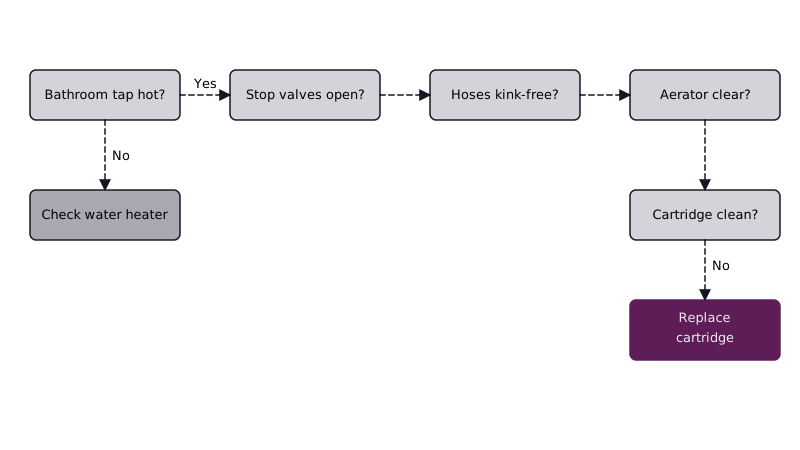
- Another tap. Run the nearest bathroom hot tap for a minute. Hot there means the heater is fine.
- Stop valves. Beneath the sink, the oval handle on the left line should turn fully counterclockwise. A valve that spins freely to no effect may have failed inside.
- Hoses. Slide a hand along each flexible line. A kink or sharp bend restricts flow.
- Aerator. Unscrew the tip of the spout, rinse the screen, and look for white crust or grit.
- Cartridge. With the water shut off, you can take off the handle and pull the cartridge. Check the hot side for debris. The guide to fixing a leaky faucet shows the order for taking it out.
A useful clue: many dishwashers draw hot water from the same hot stop valve as the faucet. A dishwasher that fills hot while the tap runs cold means the valve is open and the fault is inside the faucet.
What does it mean when no tap in the house runs hot?
If every tap stays cold, the water heater is the culprit: a tripped breaker, a failed element or thermostat on an electric unit, a pilot or thermocouple fault on a gas one, or a closed gas valve. Check the breaker or pilot first. Related reading: why you have no hot water, and a working heater with no hot water.
If only the shower is cold, a different part is at fault, and shower no hot water explains it.
A different pattern: hot water is slow to reach the kitchen. A kitchen far from the heater has to clear the cold water standing in the pipe first. That delay is normal, and it grows when the line is long or crosses a cold slab. A recirculation pump can shorten it, and installing one is plumber work.
Gas heater safety: a gas odor means getting out of the building, then calling SoCalGas on 1-800-427-2200 once you are outside. Never keep relighting a pilot that goes out; book a visit.
When does a new faucet beat a repair?
When the cartridge is worn, the faucet is corroded at the base, or a replaced cartridge has not cured it, a new faucet may cost little more than the repair. Choose a model with a ceramic cartridge, which tolerates scale better. Have a plumber check the stop valves while the sink is empty.
Old stop valves often fail the first time they are turned in years. Replacing them along with the faucet is cheap insurance, since the water has to be off anyway. Our guide to faucet replacement costs has guide prices and what changes them.
If you cannot find the cause, or a valve will not turn, stop forcing it. A snapped stop valve can flood the cabinet.
How can you arrange for a plumber to take a look?
Fill in a quote request noting which tap is cold, whether the others run hot, and what you tried. We forward it to nearby plumbing companies. Those taking requests pay us a fee, and the one that replies sets the price and does the work. You can see other jobs on the home page.
Common questions
Can hot and cold cross over inside a one-lever faucet?
Yes. A worn cartridge or a failed check valve inside the faucet can let cold water bleed across to the hot side. You would see lukewarm water in one handle position, or pressure that changes when you use another fixture. A plumber can confirm by testing each supply line.
Why did it go cold right after plumbing work in the house?
Debris stirred up by a shutoff often lodges in the cartridge or aerator. Clean the aerator first, then flush the line by letting the tap run for a minute with the aerator removed. If that fails, the cartridge needs a clean or a replacement. Tell the plumber about the earlier work.
Does a cold kitchen sink mean my water heater is failing?
Not on its own. If other taps heat up properly, the heater is working. A failing heater shows as lukewarm water or short supply everywhere. If you are unsure, test at the farthest and nearest taps, and note the time each takes to turn hot.
Must someone be home during a kitchen faucet repair?
An adult should be at home to open the door for the plumber and approve the work, staying close by when the water is turned back on. For a small repair the plumber only needs the kitchen and the cabinet under the sink. Emptying that cabinet beforehand saves time on the day.
References
- General home plumbing practice; no price figures on this page
Last changed