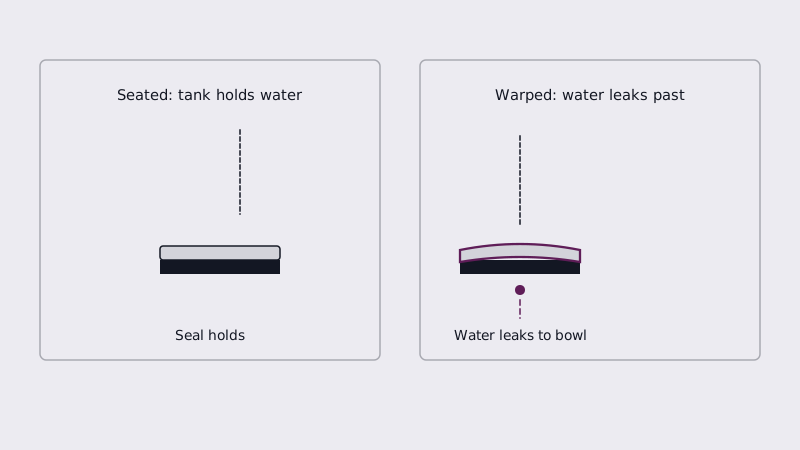
The flapper is a rubber plug that rises as you flush and falls back to close off the tank. When it warps, hardens or collects scale, water slips through into the bowl, the tank refills again and again, and you hear a trickle or a ghost flush at odd hours. Swap it, and most such toilets go quiet. The wider options are on toilet repair by a plumber.
The EPA says to check the flapper from time to time and replace it at least every five years. This page covers how to confirm the flapper is the fault, how to pick the right one, how to fit it, and what to look at when something else is leaking.
How can I tell the flapper is leaking?
Add a few drops of food coloring to the tank water and leave the toilet alone for ten minutes. If the bowl water changes color, the flapper is letting water through. Flush when you finish so the tank does not stain. Other signs: the toilet refills by itself, the fill valve hisses, or the tank is slow to stop running.
EPA figures have a typical home losing over 9,300 gallons yearly to leaks, and toilets feature often because their leaks make no noise. A faint trickle you cannot see can still waste plenty of water across a month.
A second check: shut the wall valve, then mark the tank's water level. If it sinks within an hour with the supply closed, the flapper is passing water down into the bowl.
When the bowl stays clear but the toilet keeps running, look at the chain, the fill valve and the overflow tube next. Our pages on the fill valve and the overflow tube cover those.
Which replacement flapper is the right one?
Match the size and the style. Most toilets use a two-inch flapper, but many newer ones use a three-inch drain, and the two do not swap. Bring the old one with you to the shop, or write down the toilet brand and model printed inside the tank. Universal adjustable flappers fit a range of models and have a dial for flush time.
Notice how the old flapper attaches. Some have two ears that clip onto pegs on the overflow tube, while others have a ring that slides around it. Check the chain length, and check whether your toilet is a low-flow model, which may need a particular type.
A kit often includes a flapper and chain together. Buy one if the chain is rusty.
Water in this area is usually moderately hard to hard, so mineral film may coat the seat of an old flapper. A little cleaning of the seat helps the new one seal.
How is a toilet flapper replaced?
Shut the wall valve and flush so the tank drains. Lift the old flapper off its pegs and detach the chain from the lever arm. Wipe the seat, clip on the new flapper, and attach the chain with roughly 0.5 inch of play. Turn the water back on and test. Ten minutes is often enough.
Details that matter:
- Do not pull the chain tight; a taut chain props the flapper open a crack and causes a run.
- Do not leave it too slack either, or the flapper will not lift fully and flushes will be weak.
- Wipe around the flush valve opening with a damp cloth or a non-scratch pad.
- Run the dye test again after an hour.
Hands in the tank are safe; the water there is clean supply water, not from the bowl. But wear gloves if it makes you more comfortable.
What next if the new flapper still leaks?
Inspect the flush valve seat for pits or a crack, since a damaged seat will not seal against any flapper. Try a seat repair ring, or replace the flush valve. Also check the chain slack, the fill valve height, and compare the water level with the mark on the overflow tube.
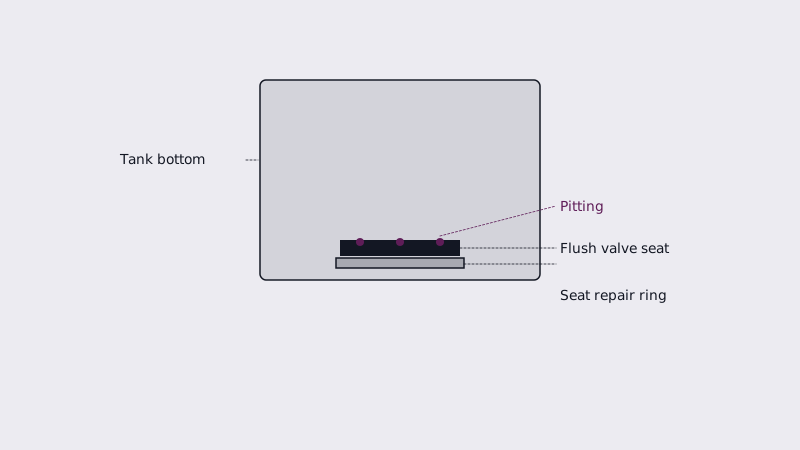
A worn seat looks rough or has mineral crust. A small crack in the overflow tube lets water drain steadily, which acts like a bad flapper. If the tank is old, or the bolts at the base leak, repairing the tank may cost more than replacing the toilet.
Related reading: fixing a running toilet gives the steps, while the reasons a toilet keeps running and a toilet that never stops running cover the causes.
A weak flush is a different matter, and toilet flush repair looks at that. Should the wall shutoff valve leak or refuse to close, read about the toilet shut-off valve first, because any repair depends on it working.
Do chlorine tablets damage flappers?
Yes, they can. In-tank cleaning tablets sit against the rubber and make it brittle, which cuts the life of a flapper sharply. Replace the flapper if you use them, or stop using them. A bowl cleaner poured into the bowl does less harm than a tablet dissolving in the tank.
Chlorine and chloramine in treated water also attack rubber over the years, and mineral scale fouls the seat. This is why flappers fail on schedule even in a well-kept bathroom.
If your flapper keeps hardening within a couple of years, tablets are the likeliest cause.
When does a flapper problem need a plumber?
Bring one in when the shutoff valve will not close, the flush valve or tank bolts leak, the toilet rocks, or fresh parts have not ended the running. A plumber can also test pressure, since very high water pressure wears out valves and seals early.
If you would rather skip the DIY, swapping a flapper makes a short visit, often combined with other small jobs, for instance a new wax ring, supply line or fill valve. Ask for every item on the written quote so you can accept just some of them.
We print no price here because we have no sourced figure. Requests sent through the form are passed to a nearby plumbing company, which quotes and does the work, and the companies that take requests pay us a fee. The Murrieta Creek Plumbing home page lists what else is arranged.
Common questions
What is the right interval for replacing a flapper?
The EPA recommends a change at least once in five years, and sooner if you use in-tank tablets or have hard water. Do it earlier still if the dye test turns the bowl colored. A flapper costs little, and a leaking one wastes water daily, so waiting rarely saves money.
Will any flapper fit my toilet?
No. Size and style matter. A 2-inch flapper will not replace a 3-inch one, and some toilets need one specific model. Adjustable universal flappers suit many. Read the brand printed in the tank, or take the worn flapper with you to the store.
Why does my toilet run briefly every hour or so?
That is a ghost flush: a slow leak past the flapper lowers the tank level until the fill valve opens for a moment. It is the classic sign of a worn flapper, and the dye test will back it up. Fit a new flapper and clean the seat.
Will a flapper fix a weak flush?
Not usually. A weak flush comes from a chain that is too slack, a blocked rim jet, low water in the tank, or a partial clog further down. A flapper that does not lift fully can contribute, so check the chain length first before you buy anything.
Must the water be off before I swap it?
Yes. Close the wall valve behind the toilet, flush once so the tank empties, and hold the handle down until the last of the water drains. Working in an empty, dry tank is easier and keeps the floor clean, and a few minutes with a sponge removes any water left in the bottom.
References
Last changed