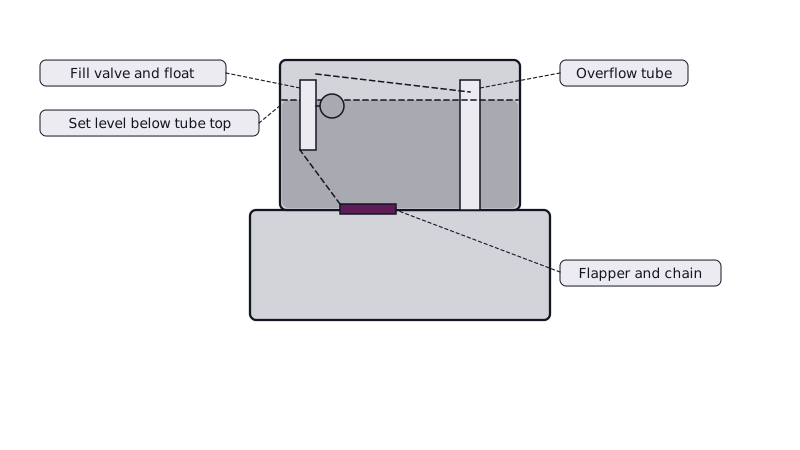
If a toilet goes on running once the flush ends, one part in the tank is not sealing or not shutting off. The suspects are the flapper, the fill valve and the float setting, and a few minutes with the lid off usually reveals which. Our toilet repair overview covers the wider range of toilet problems if this turns out to be something else.
Why does a toilet go on running after the flush finishes?
Either the tank cannot keep its water or it never stops filling. In the first case the flapper on the tank floor lets water seep into the bowl, and the fill valve keeps replenishing it. In the second, a fill valve or float adjusted too high pushes water over the rim of the overflow tube. Lift the lid and watch the level.
When the water rests right at the rim of the overflow tube and trickles in, the float is too high or the valve is worn. If the level is well below the tube yet water still flows, the flapper is leaking. That one split solves most cases.
What does each sound mean?
A hiss usually means the fill valve is leaking or the float is stuck. A trickle every few minutes with no flush ("phantom flushing") is a leaking flapper. A constant loud run after a flush means the flapper is not seating or the chain is snagged. A whine may point to a worn fill valve, or to excessive pressure in the supply.
Keep a note of what you hear and when. If the tank tops itself up while the house is empty, the flapper is almost always to blame. One that fills slowly and then shuts off is likely a clogged fill valve screen, a different problem that is not about running at all.
How can you check for a flapper leak?
Add a little food dye to the tank, then hold off flushing for about ten minutes. A tinted bowl means the flapper leaks. The EPA recommends this test, and says to flush straight afterwards so the tank does not get stained.
Then check the flapper by hand: press it down and feel for a gap. Sediment, a bent chain or a warped rubber edge are the usual culprits. A flapper that is old, soft or sticky should be replaced, and the EPA suggests a new one at minimum every five years. See toilet flapper repair for the swap, step by step.
How do you fix the fill valve and float?
Lower the float first. Depending on the model, bend the arm down, adjust the screw, or move the clip along a cup float, until the water settles about one inch below the overflow tube's top. If the valve still hisses, take off the cap, let water spurt briefly to clear debris, and put it back.
When a worn seal still stops it from closing, replace the valve. A universal fill valve is a basic hardware store part, and fitting one takes about half an hour. The whole job is explained in repairing a toilet fill valve. Close the stop valve before you start; if it is stuck, the shutoff valve guide can help.
Does the overflow tube or the tank cause running?
Sometimes. A cracked overflow tube lets water drain away even when the level is low, and a tank that was set too full spills over it. The tube has to sit above the flapper opening, and the fill valve refill tube should clip to its top, not push inside it.
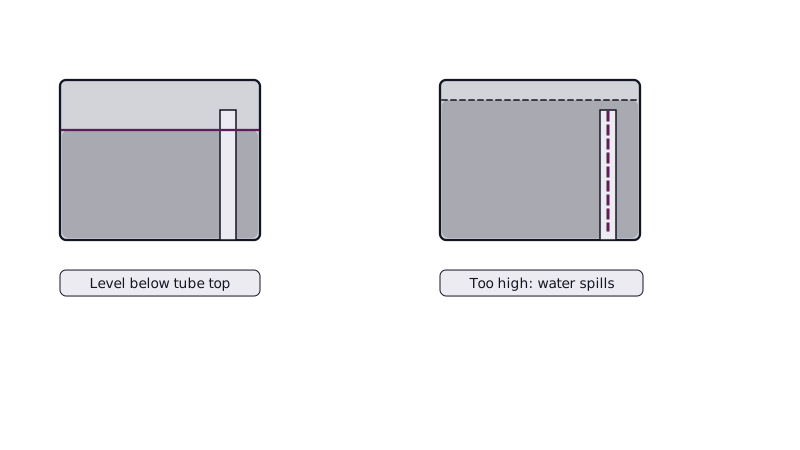
Gently clip the refill tube above the tube's rim and watch for a stream into the tube. A cracked overflow tube is covered in fixing a toilet overflow tube. A leak at the base or the tank bolts, instead of water running into the bowl, is a different fault, handled in toilet leak plumbers.
How much water does a running toilet waste?
A great deal, and silently. The EPA estimates that an average home loses over 9,300 gallons per year through leaks, and toilets are among the commonest culprits. Since the water vanishes down the drain, there is no puddle to see, just a bigger bill.
The utility meter test works well. Shut off every fixture and note the meter reading. Two hours later, read it again. If the dial has moved and the toilet is your suspect, close its stop valve and repeat; a meter that now holds still has found your leak. Other likely causes of a high bill are listed in reasons your water bill is high.
At what point does a plumber make sense?
Phone someone if the toilet still runs after both the flapper and fill valve are new, if the stop valve cannot be closed, if the tank or bowl is cracked, if the supply line is corroded, or if the toilet is so old that parts no longer fit. Also call if running comes with a clog or slow flush.
Older homes, such as some in Old Town Murrieta, can have older toilets with parts that are hard to match, and sometimes it is cheaper to replace the whole toilet. The local plumber can say which route is sensible. If the main water line or house pressure is the cause, the regulator may be the real fix.
Common questions
What causes brief bursts of refilling with no flush?
That is a phantom flush. Water seeps past a worn flapper, the tank level sinks slightly, and the fill valve refills it. The cause matches a continuous run, just at a slower pace. Fit a new flapper, and give the chain some play so the flapper can drop fully shut.
Is it fine to keep jiggling the handle?
As a stopgap, yes, but a toilet that needs a jiggle every time has a fault. The chain may be too tight or the flapper may not be seating. Ignoring it wastes water and money. Look at the chain: with the flapper closed, about 0.5 inch of slack is correct.
Can a constantly running toilet harm a septic system?
It can. Surplus water entering a septic tank may overload the drain field, a real concern on rural lots that rely on septic systems. Repair a running toilet promptly, and consult a pro about the system if the ground turns wet or drains slow down.
Is the toilet the reason my water bill jumped?
Possibly, because a leaky toilet may lose thousands of gallons monthly, though rule out other sources before deciding. The meter test above shows whether water moves while everything is off. If the toilet checks out fine, read about a water bill that climbs with no leak in sight.
How does a plumber get arranged here?
Complete the quote page and your details go to a local plumbing company. That company visits, quotes and does the repair, and it pays this site a fee for the referral. We do not employ plumbers. How it works has more, and the home page is one click away.
References
Last changed