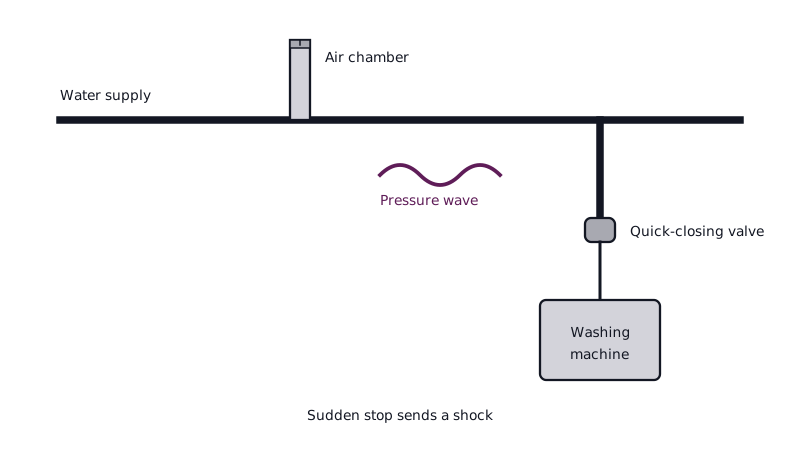
Water hammer is the knock you hear when moving water is stopped suddenly. A solenoid valve in the washer closes, or a faucet lever snaps shut, and the water behind it crashes against the shut valve, sending a shock down the pipe. In Murrieta homes the usual fixes are restoring air cushions, lowering pressure or adding arrestors. Requests from this site go on to local plumbing businesses across Murrieta, CA and the nearby service areas, and the home page lists what a visit can cover.
What makes the banging noise when a tap or appliance turns off?
The sound is a pressure wave. Moving water carries momentum, so when a valve closes in a fraction of a second, there is nowhere for it to flow. The wave surges back and forth along the pipe and rattles anything loose. Quick-closing valves are the usual triggers: those on washing machines, ice makers, dishwashers and single-lever faucets.
A single bang from one appliance is typically that appliance's valve. A bang from everywhere, or one that comes with a rattle and shake, points to something house-wide: high pressure, a flooded air chamber, or loose pipe straps. Listen for which fixture sets it off, and whether the noise comes at shutoff or at start.
Other noises mean different problems. A hum or squeal when water runs usually means a worn washer or valve. A rumble from the water heater is sediment. A ticking in the walls when hot water runs is pipe expansion. See water pressure regulators if the banging goes with high pressure.
Is water hammer harmful, and when is it urgent?
It is not an emergency but it is not harmless either. Repeated shocks can loosen fittings, stress solder and PEX joints, shake supply lines and wear valves and appliance hoses out early. If you see wet spots, a leak after a bang, or the noise gets worse, call a plumber. A single faint tick is a lower priority.
Shock pressure can spike well above the line pressure for an instant. That is why a house that already runs near the top of the range, for example at the 80 psi ceiling that the California plumbing code sets, may suffer more. If your hammering is paired with a hissing regulator, running toilets that sip water, or leaky faucets, pressure may be too high. A simple screw-on gauge from a hardware store, fitted to an outdoor spigot, reads it. Reading above 80 psi means the regulator needs attention.
Smell gas by the water heater or elsewhere? Get out of the building first, then ring SoCalGas on 1-800-427-2200 once outdoors, and use 911 if you feel in danger.
How do I get air back into the chambers?
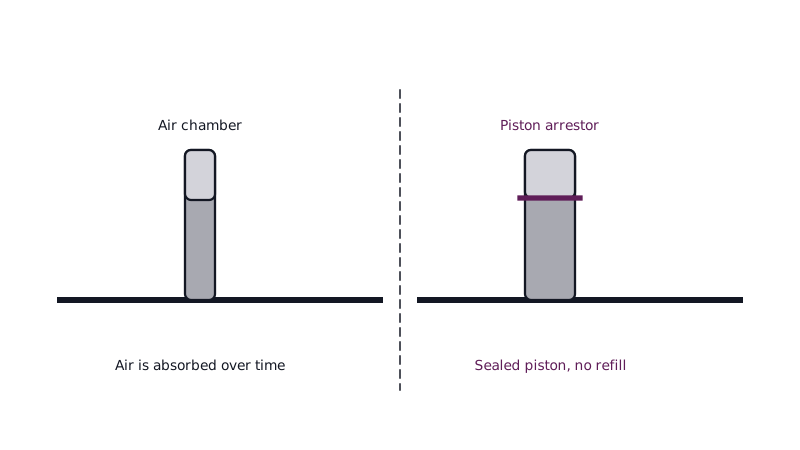
Many homes have short capped vertical pipes in the wall behind fixtures, called air chambers, that trap air as a cushion. Over time the air dissolves into the water and the chamber floods, which removes the cushion. Draining the system lets air back in. It is a safe, free fix to try first.
How to do it: close the main water valve and open each faucet in the house, beginning with the highest, flush toilets once, and let the pipes drain completely. Leave the taps open for a few minutes, then close the faucets from lowest to highest and open the main slowly. Check all fixtures for leaks. The cushion returns as the pipes refill with air.
The fix lasts months or years, depending on how quickly the air is absorbed. If the noise returns within weeks, the chambers may be missing, undersized or corroded, and a plumber can install mechanical arrestors, which use a sealed piston or bladder and do not run out of air.
Which fix works for my house?
Match the fix to the cause. Loose pipes need straps or foam cushioning. High pressure needs a regulator adjustment or replacement. A single noisy appliance needs an arrestor at that supply, usually a small cylinder between the valve and the hose. Whole-house hammer may need arrestors at several fixtures. A flooded air chamber needs the drain reset.
Walk through it in order:
- Find the pressure with a gauge. Fix that first if it is over the limit, see adjusting the pressure regulator and where the regulator is located.
- Try the drain reset.
- Look at pipe straps where lines run through an attic, crawlspace or garage, and add cushion where pipes touch framing.
- Add arrestors at the washing machine, dishwasher or whichever fixture triggers it.
- If the bang follows hot water use only, have the plumber check the heater, its relief valve and any expansion tank.
Hard water affects valves and cartridges as well. Third-party estimates put Murrieta tap water in the moderately hard to hard range, and mineral scale can make valves close roughly, so cleaning or replacing a worn cartridge sometimes cures a single bang. See hard water scale for what scale does in the plumbing.
When should I call a plumber, and what happens on the visit?
Call a plumber when pressure exceeds the limit, the cause stays hidden, arrestors must go inside a wall, noise comes from several spots in the house, or a leak appears. The visit covers a pressure check, listening along the lines, testing the regulator and a recommended fix. The written quote should list what it includes.
In California a contractor license is needed for permit jobs and for work above a small dollar threshold, so get the license number and verify it with the state board. Swapping a pressure regulator, rerouting piping or adding fixtures may need a permit from your building office. Murrieta addresses go through Building and Safety, listed at 951-461-6062, whereas unincorporated French Valley and Winchester fall under Riverside County.
To arrange a visit, ask for a price and tell us what makes the noise and when. Our guide on low water pressure covers the opposite problem, and why a water bill climbs helps if a leak accompanies the noise. More on regulators is at water heater pressure regulator.
Is the water heater the cause of the banging?
Sometimes. A water heater without an expansion tank, on a system that is closed, can cause banging or pressure spikes as it heats, and a failing relief valve may drip. Banging at the heater when it fires up, or when hot water is used, points that way. Sediment rumbling is another noise that sounds similar to a bang.
Closed systems often need an expansion tank, but the code does not simply require one everywhere, so ask a plumber. The related page expansion tank replacement explains how it works. If the noise is a rumble from the tank, that is scale, and the heater page will help.
Common questions
Can I just ignore the knocking?
For a while, but not forever. A faint, occasional knock is a nuisance. Repeated heavy bangs can loosen joints and reduce the lifespan of valves and hoses, and the cost of repair later is higher than a cheap arrestor now.
Do arrestors need servicing?
Mechanical arrestors are sealed and generally need no maintenance, though they can fail over time. Old-style air chambers need the drain reset now and then. If the knock returns after an arrestor was fitted, ask the plumber to check it.
Why only at night?
Night is often when pressure is highest, since neighbors use less water, and the single toilet refill or washer fill you hear is more audible in a quiet house. A pressure gauge left on overnight shows whether supply pressure rises.
Which businesses should I choose for this?
Choose a plumber who will measure the pressure before suggesting parts, show you the reading, and put the scope in writing. Be wary of anyone who proposes replacing a lot of pipe without testing pressure first, because the fix is often something small, like a regulator or an arrestor.
Last changed