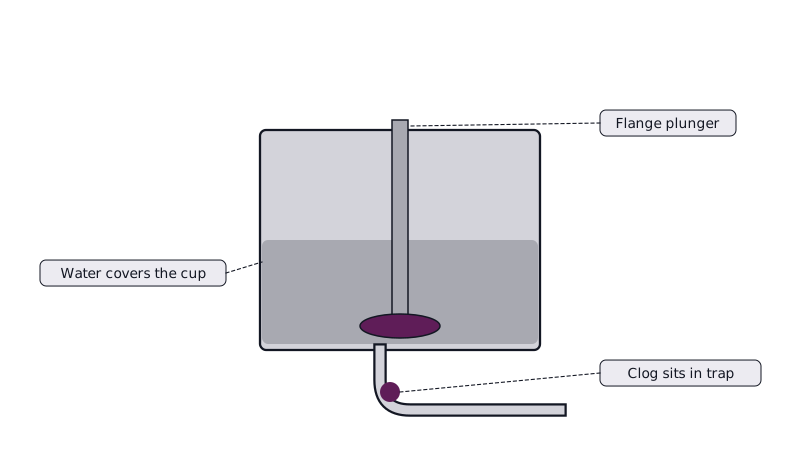
A blocked toilet usually clears with a flange plunger and a firm, steady push. Do not flush again while the bowl is high. To stop an overflow, take off the tank lid and push the flapper closed, or turn off the valve sitting on the wall behind the toilet. If plunging and an auger fail, or other drains are slow too, the clog is deeper. See our drain cleaning and clogs page.
What is the first move if the toilet is close to overflowing?
Stop more water from reaching the bowl. Reach into the tank and hold the flapper closed, or turn the wall supply valve clockwise. Do not flush. Spread towels and wait for the level to drop. A bowl that is rising slowly may settle by itself. A full bowl must be bailed before you plunge.
Quick steps:
- Shut the wall supply valve, or keep the flapper held down.
- Spread old towels and a plastic sheet around the base.
- Put on rubber gloves.
- If the bowl is nearly full, scoop some water out into a bucket, leaving a few inches. If the bowl is low, add water until the plunger's rim will be covered.
- Keep children and pets away. Bowl water may carry bacteria, so wash with soap afterward.
If water also comes up through the floor drain, tub or shower, the main line is likely blocked. Stop using water in the house and jump to the last section.
How do I clear a toilet with a plunger?
Choose a flange plunger, with the soft rubber lip that folds out, and seat it so it seals around the drain hole. Push down gently first to expel air, then pump with firm strokes without breaking the seal. After ten to fifteen strokes, pull sharply. Water should drain. Repeat several rounds before giving up.
Tips that make the difference:
- A flat cup plunger meant for sinks seals poorly in a toilet. Use the flange type.
- Keep enough water in the bowl to cover the plunger.
- Push and pull evenly. Violent jabs splash.
- Between rounds, let the water settle, since the clog may break up slowly.
- Flush only after the bowl drains with a normal gurgle.
For a clog that is mostly paper, hot tap water with some dish soap squeezed in can help; leave it fifteen minutes. Never use boiling water, which can crack porcelain.
What if plunging fails?
Reach for a toilet auger, also known as a closet auger, which is a short bent cable made to pass through the trap. Push it in slowly while turning the handle until you feel resistance, then crank to hook or break up the clog and pull it out. It is gentler on porcelain than a regular drain snake.
Do not pour chemical drain cleaner into a toilet. It can sit in the bowl, splash back, damage seals, and put whoever opens the drain next at risk. Skip wire coat hangers too. They scratch porcelain and rarely reach the clog.
Common culprits are:
- Excess paper in a single flush.
- Wipes labeled flushable, which do not break down like paper.
- Toys, cotton products and sanitary items.
- A low-flow toilet that struggles and partly clogs. Newer toilets use less water per flush, which is fine in normal use, but heavy loads can block them more easily.
If a toilet is repeatedly clogging, a worn flapper or a partly blocked trap could be a factor. See toilet flush repair.
When is the clog beyond the toilet?
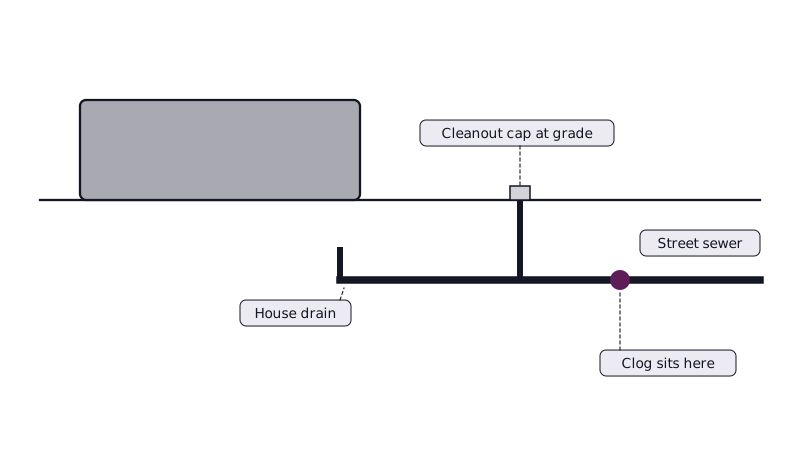
If other drains gurgle or ooze, the shower drain slows when you flush, or several fixtures back up together, the blockage lies in the branch or main sewer line. A plumber with a larger drain snake or a camera is needed. Plunging will not fix a main line blockage.
Watch for these patterns:
- Flushing a toilet makes the tub or shower drain bubble.
- The shower, usually the lowest drain in the house, backs up first.
- A sewer smell in the yard, or water pooling around the cleanout.
- Everything is slow, not just one fixture.
A cleanout is a capped pipe outside the house that gives access to the main line. If the line is backed up, leave the cap on unless you are experienced, because sewage can flow out. Tree roots are one cause of main line trouble, as are grease and wipes. For houses on a septic system, as some rural lots are, the clog may involve the tank or leach lines, which needs a specialist.
For other drains, see how to unclog a drain and unclogging a bathroom sink.
At what point should you call a plumber?
Call after two or three honest tries with a plunger and an auger, when the toilet rocks, leaks at the base or is cracked, or at the first hint of a main line problem. Call too if the toilet clogs again within days. Waiting with a half-blocked line can cause an overflow.
Sewage backing up is also a hygiene risk. Keep people away from the area, and do not run water. Cleanup needs gloves and disinfectant, and large spills may need a restoration service. If sewage has soaked into carpet or drywall, check your insurance.
Be careful with DIY on a toilet that has to be pulled up. Removing it needs a new wax ring and careful resetting, or it will leak. If you pull one, tell the plumber what you did.
Need a hand? Try the quote page. We forward requests to local plumbing businesses, which pay us a fee for accepting them; whichever business visits sets the price. The Murrieta Creek Plumbing home page has more.
Common questions
What makes a toilet clog again and again?
Likely causes include too much paper, wipes, a weak flush from a worn flapper or a tank that sits low, or a partial blockage somewhere in the trap or line. If it is happening monthly, watch what goes down it, check the tank water level, and consider having the line scoped with a camera.
Is hot water or dish soap safe in a toilet?
Hot tap water and a bit of dish soap are fine and often help loosen paper clogs. Boiling water is out, since it can crack the bowl. Pour from waist height, let it sit, then plunge. Chemical cleaners are the thing to avoid.
Is a regular drain snake a substitute for a toilet auger?
A regular snake can scratch the porcelain, so a closet auger made for toilets is better. Its curved head and protective sleeve are designed to pass through the trap. Without one of your own, a plumber will have it. Do not force a cable that meets heavy resistance.
How can I tell if it is a main line problem?
If several fixtures are slow or backing up, if the lowest drain is the first to overflow, or if plunging does nothing and water rises at other drains, suspect the main line. Stop using water, then ring a plumber. A plunger will not clear a main line clog.
Last changed