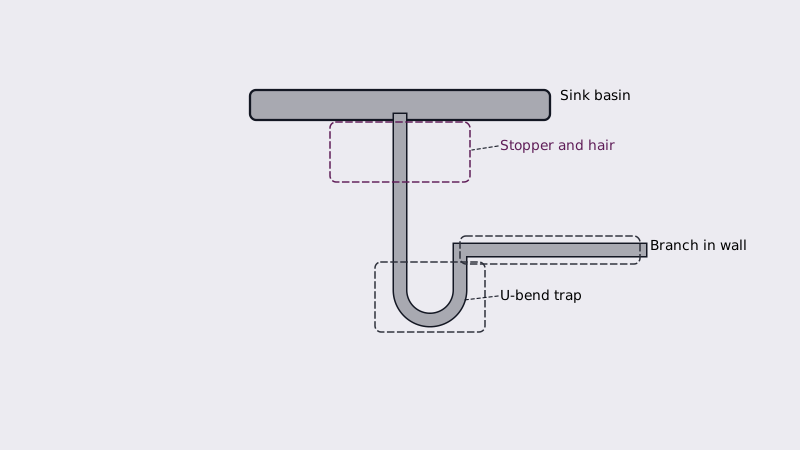
Most bathroom sink clogs are found close to the drain opening, or in the U-shaped trap right under the sink. Hair snags on the stopper rod, soap binds it into a plug, and water slows to a standstill. A bucket and pliers are normally all you need, and the job takes about half an hour. For clogs beyond the sink, see drain cleaning and clogs.
Where should I start when the basin is full of water?
Start with the stopper. Lift it out or unscrew it, and strip off the hair and gunk wrapped around it. On many pop-up stoppers you reach under the sink, loosen the nut where the horizontal pivot rod enters the drain, and pull the rod to lift the stopper free. Most sink clogs are within this first few inches.
Put a towel under the sink and a bucket beneath the trap before you start. Wear gloves. If the water is deep, bail it into a bucket first. Use a flashlight to look down the drain. A small drain tool, a barbed plastic strip, pulls hair out of the first section. Run hot tap water afterward for a minute and see if it moves.
If the stopper was clean and water still stands, the clog sits deeper. Go to the plunger next.
Is a plunger safe to use on a bathroom sink?
Yes, provided you block the overflow hole in the basin with a wet rag or your hand, so the pressure is forced down the pipe. Use a cup-style plunger rather than the flanged type made for toilets. Put an inch of water over the drain, seat the cup, push firmly and steadily for about twenty seconds, then yank the plunger off sharply.
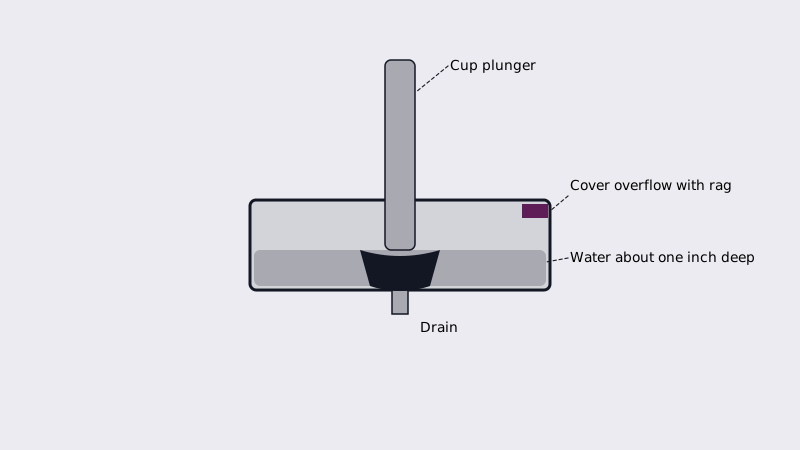
If water starts to drain, run the tap and check that the sink clears quickly. Repeat a couple of times. If you hear gurgling from other fixtures, or water rises in the shower drain or tub when you plunge, the blockage is in a shared line and a sink-level fix will not hold. That is a job for a drain machine. See the guidance at how to unclog a drain.
Keep chemical drain openers out of this. They can burn skin, splash back, damage old fittings and, if they fail, leave you plunging caustic water. They are also a bad idea for any rural property that runs on a septic system, because harsh chemicals can disturb the bacteria a tank relies on. Check which sewer system you are on.
What makes a bathroom sink clog again and again?
A repeat clog has a repeat cause: hair that slips past a stopper with no strainer, soap and toothpaste scum, a trap with a bad slope, a partly blocked vent that stops the drain from breathing, or a main branch narrowing from buildup. In an area with hard water, mineral scale adds to the sludge on the pipe wall.
Third-party estimates generally rate Murrieta tap water moderately hard to hard, so soap forms more scum here than in soft water areas, and a monthly routine pays off. A drain strainer is the best low-cost preventer. Pay attention to how the sink flows, not only to a final blockage. The slow-drain case is covered in fixing a slow bathroom sink drain and reasons a sink drains slowly.
Shower and tub drains behave similarly. Hair clogs the strainer and the first foot of pipe. The same approach applies: lift the cover, remove the hair, then use a drain tool. Do not mix methods or products in the same drain.
At what stage should a plumber take over?
Book one when the drain stays blocked after you have cleaned the stopper and the trap, when several fixtures run slowly or back up, when sewage smells appear, when water leaks at the trap or from the wall, or when the clog is back inside a few days. Such signs mean the blockage lies further down and a drain machine or camera is needed.
A plumber begins with a brief diagnosis: which fixtures are affected, how quickly they drain, and what the trap and branch line look like. A written quote ought to state the method, the access point, and the fallback if the first approach fails. In California a contractor license is needed above a small dollar threshold or when a permit applies, and a simple clog clearing usually counts as the small kind. When a line repair or a new cleanout is proposed, ask whether a permit applies. For prices, read the cost of having a plumber clear a sink.
To get a visit set up, send a price request and say what you tried. Other services we arrange are on the plumber home page.
How do I take apart the trap and clean it out?
Put a bucket under the trap, loosen the two slip nuts with your fingers or pliers, lower the U-bend and tip out its contents. Rinse it, clear the gunk, check the washers for cracks, then refit it hand-tight plus a quarter turn. Then test with running water and look for drips. Many clogs sit right there.
Details that save trouble: note which way the pieces face before removal, and keep the washers in order. Plastic nuts strip if overtightened. A metal trap needs gentle handling, since old nuts seize. Shine a flashlight into the pipe that goes into the wall, and if you see debris, a small flexible snake can reach beyond the trap. Do not force it.
After reassembly, run hot water for a minute and hold a dry tissue to the joints. A damp tissue means a nut is not seated. Do the test twice before you walk away.
If you see corroded or pinholed pipe, brittle old plastic or a crack, stop, because new parts may be needed, see leaking pipe under the sink.
Common questions
Can boiling water go down a blocked sink?
Not on porcelain, which can crack, and not on PVC, which can soften at the joints. Hot tap water is fine. Boiling water rarely clears a clog made of hair and soap scum anyway, so use the stopper, strip tool or trap instead.
What can I use if I have no plunger or snake?
A bucket, a towel and pliers are enough to clean the stopper and trap, which clears most sink clogs. You can also bend a wire hanger into a small hook to lift hair from the drain opening, though it may scratch pipe, so use a plastic strip if you have one.
Does baking soda and vinegar work?
The fizz can freshen a drain, but it is weak against a real hair plug. If it helps, the clog was minor. It is not a reliable replacement for removing the stopper and cleaning the trap, and it should not be mixed with commercial openers.
How do I stop the sink clogging again?
Install a strainer, wipe away toothpaste and soap residue rather than rinsing it all down, clean the stopper each month or two, and rinse the drain with hot tap water after use. If the sink clogs more than twice a year, have a plumber examine the branch line.
Last changed