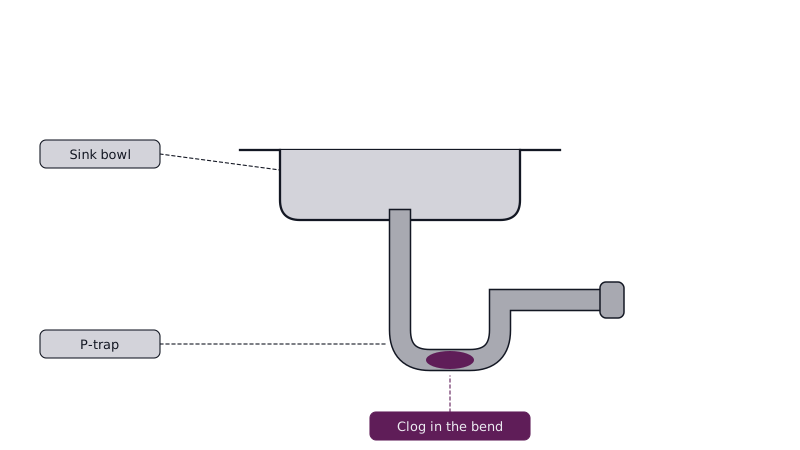
Match the tool to the blockage. A shower or tub stops with hair, so you pull it out with a barbed strip. A kitchen sink stops with grease, so you plunge or auger the trap. A washer line stops with lint. If several fixtures slow together, the main line is the problem, and that is trade work. More on drain cleaning and clogs is on the hub page.
Why avoid baking soda and vinegar on a clogged drain?
The fizz is carbon dioxide and a weak salt solution. It looks busy, yet it barely loosens hair or set grease, and the reaction is spent in seconds. In a tub drain, most of the foam climbs back out of the hole. A plunger or auger moves an actual blockage; the pantry mix mostly makes a show.
Worse is the sequel. People pour vinegar after a store cleaner, or a cleaner after the vinegar, and get a pipe full of an unknown mixture. Caustic liquid that sits above a clog can splash into your eyes when you plunge.
Poured a chemical in already? Hold off on plunging. Tell the plumber exactly what product it was, because a person opening the trap meets that liquid first.
What about disposals, laundry lines and AC condensate drains?
Each of the three has a favourite culprit. Disposals and kitchen traps plug with fat and fibrous scraps, washers with lint and detergent paste, air-conditioner condensate lines with slime. Handle each one on its own terms, and kill power to anything with a motor before you touch it.
Disposal. Kill the wall switch first. A unit that only hums has a jam: fit a hex key in the socket under the housing, rock it free, press the red reset button. A sink that still lags after that has its plug in the trap or further down the line. The steps for unclogging a garbage disposal drain sit on their own page.
Laundry. Overflow at the standpipe during the drain cycle means lint or soap paste. Pull the hose, snake the standpipe, and test with a bucket. If the standpipe backs up while the bathroom runs clean, suspect the shared branch and call for a bigger machine.
AC condensate. A small white PVC line near the air handler or the outdoor wall. Pooled water under the unit, or a system that shuts down, points to slime. A wet-dry vacuum on the outside end often draws it out, and a splash of vinegar poured into the access tee every few months slows regrowth. Anything past that is heating and cooling work, not plumbing.
How do you pull hair out of a shower or tub drain?
Hair gathers in the top few inches below the strainer, so lift the cover, pick off the visible wad, then push a barbed plastic strip (sold in hardware stores) down the opening, twist, and draw it back. Repeat until nothing new comes up. Tubs with a lever or pop-up stopper hide the worst tangle on the rod itself.
Unscrew the lever plate on the overflow, slide the linkage out, and wipe the rod. Most tub trouble in households with long hair lives right there, not in the pipe.
Afterward, flush with the hottest water the tap gives, then drop a mesh catcher over the opening. If standing water returns after two or three strips, the plug sits beyond arm's reach, past the trap. A hand auger is the next rung. Anything beyond that is a visit.
When is it time to hire drain cleaning services?
Stop after a second failed tool, if two fixtures misbehave at once, or if you notice a sewage smell. A powered cable or water jet reaches what a hand tool cannot, and a camera shows why the line keeps catching.
Repeat clogs every few weeks hint at something fixed in the pipe: a rough joint, a sag where waste pools, roots in an older lateral, or mineral scale. In a fairly recent house, a persistent snag more often points to one defect than to general wear.
Some rural lots outside the city run on septic. A backup at the lowest drain can mean a full tank. Stop using water and phone a septic specialist.
To book, request a quote naming the fixture, how long it has been slow, and what you already tried. We hand each request to local plumbing businesses, which pay us a fee for it, and the one that answers sets the price and does the job. For a ballpark first, read the price of clearing a sink. Everything else is on the home page.
Which chemical-free methods clear a drain?
Go in this order: cup plunger, hand auger, then a wet-dry vacuum held tight on the opening. All three act on the blockage directly and leave nothing behind in the line. Chemicals are a last resort, used once, never mixed.
Plunging a sink needs a seal. Jam a damp rag in the overflow slot, add water over the rim of the cup, then pump hard in bursts of ten or so. A double kitchen sink needs the second side stopped up as well, or the pressure just leaks across.
An auger goes in until it stalls. Crank, advance a little, crank again, then withdraw slowly and wipe what comes out. Forcing the cable around a tight bend is how people scratch a pipe or jam the tool, so ease off if it will not go.
Cable width matters. A narrow cable pokes a hole in a thick plug, water trickles past, and it all rebuilds in a week.
How can you tell a clogged vent from a clogged drain?
Look for company. A clog stays in one fixture or branch. A vent problem brings gurgles, sluggish flow at several fixtures, or a whiff of sewage. Hear the toilet burble whenever the shower runs? Air is struggling to enter the line, which points at the vent or the main.
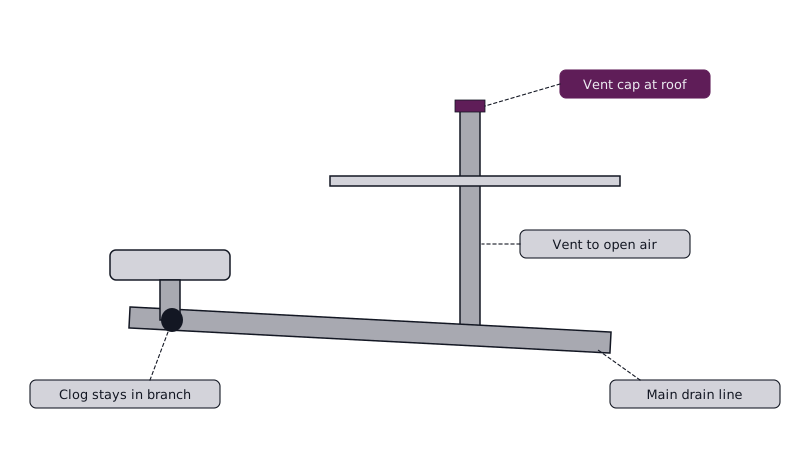
The vent terminates through the roof. Birds, leaves and debris can cap it. Checking means climbing a hot Murrieta roof, and that fall is a bigger danger than any slow drain, so leave the climb to someone with the gear.
Quick sort: one sink slow means open that trap. Water rising in the tub after a flush, or a floor drain that burps, means the main line is involved, and that needs a service visit.
Common questions
Does liquid drain cleaner have any place in this?
Sometimes, on a soft fresh clog, once, with gloves and the window open. It does nothing against a solid plug and it is hard on old fittings and rubber seals. Never combine two products. Warn the next person who opens that pipe, since leftover liquid can burn skin.
Why does the tub still run slow when the hair is gone?
A film of soap and body oil narrows the trap bit by bit, even without visible hair. Push a strip or small auger through the trap and rinse with hot water. Hard water scale adds to the narrowing, and it will not wash out, so a trap that stays slow may need replacing.
Can a hand auger damage my pipes?
On bathroom lines with a gentle hand, no. Force is the problem. A cable shoved around a bend can kink and stick, or score thin metal. If it stalls and will not advance, stop pushing. A stuck cable is a bigger job than the clog you started with.
What can a plumber reach that I cannot?
The main line behind the house runs far longer than a hand cable. A professional carries a motorized cable machine or a high-pressure water jet, plus a camera on a push rod that shows the pipe wall and whatever is jammed in it. That is why a multi-fixture backup warrants a visit rather than another attempt.
What keeps drains from clogging again?
A mesh catcher in each shower and tub, grease wiped into the trash instead of rinsed away, and a monthly look under the stopper. Those three cheap habits remove the main causes of repeat blockages. Skip flushing wipes labelled flushable, which collect on rough spots in the line.
References
- General home plumbing practice; no price figures on this page
Last changed