Polybutylene replacement means taking out the gray plastic supply pipe and its fittings and running new PEX or copper in its place, which is a form of repiping and pipe replacement. It is not a repair of one leak. The material breaks down from the inside when exposed to chlorine in treated water, so pipe that looks sound can still be weak. Many owners schedule the replacement before the first leak.
Most Murrieta homes are newer than the polybutylene era, since the median year built is around 2000. That makes it uncommon here, though a house from the 1980s or early 1990s, or one whose pipes were changed in a remodel, might still have it. This page explains how to check, what to do, and how to handle the project.
How can I tell whether my house has polybutylene pipe?
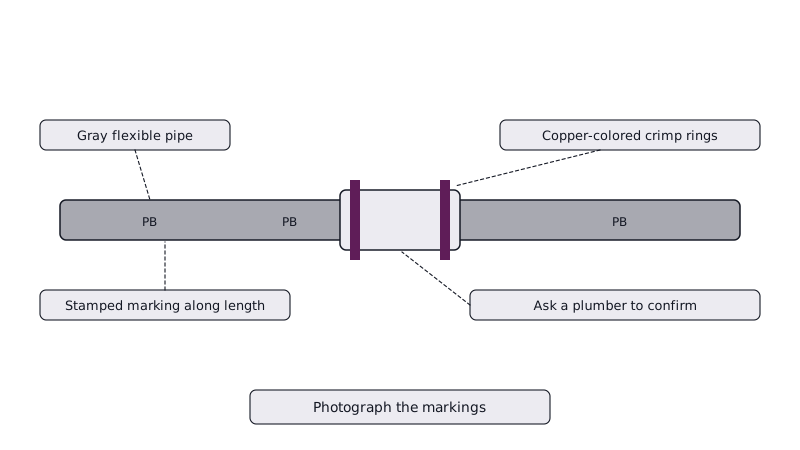
Polybutylene is a bendable plastic pipe, usually gray, sometimes blue, silver or black, with markings such as PB2110 stamped along its length. Check the attic and garage, near the water heater and by the main shutoff, and beneath the sinks. Each connection uses crimp rings or plastic fittings, often copper-colored or gray.
Several million homes across North America received it from roughly 1978 to 1995. If your house was built or remodeled in that window, go and look. A house from 2000 or later is unlikely to have it, which covers most of Murrieta, and PEX is a different pipe and is acceptable.
If you cannot tell, a plumber can identify it at a glance. A home inspector's report may also note it. The label on the pipe is the evidence, so photograph it.
Why do polybutylene pipes fail?
Chlorine and chloramine in treated water attack the pipe and the plastic fittings from the inside, making them brittle, and stress at bends and fittings speeds the damage. The failure is often invisible until a fitting cracks or a pipe splits, and it can happen suddenly. Water at higher pressure or temperature accelerates it.
That is why a system that looks fine can still be at risk. The damage builds slowly out of sight, and a failure can flood a wall or ceiling before you notice. Why pipes burst puts this next to the other causes.
The material is no longer accepted by building codes, and polybutylene pipe is no longer sold in North America. A past class action settlement should not be counted on as a source of money today; check current information rather than assuming.
Is now a good time to replace polybutylene?
Often yes, since a planned replacement costs less and causes less upheaval than a flood. Water damage from one failure can travel through a floor, a ceiling and a wall, and insurers may count the pipe as a risk. Acting before a leak lets you choose the timing, protect finishes and compare quotes without pressure.
Some owners wait and accept the risk, which is their choice, but each year raises the odds. A leak at a fitting, or a home going up for sale, makes replacement more urgent. Buyers and insurers often ask about the pipe.
Ask your insurance agent how polybutylene is treated on your policy. Our page on why repipe a house discusses the decision, and how often to repipe helps with timing.
What do I replace it with: PEX or copper?
Both are accepted in California. PEX is flexible, goes in faster, tolerates minor movement and costs less in materials, which can mean less wall opening. Copper is rigid, long-lived and favored by some owners for permanence, but takes more labor and joints. Hard water suits PEX better than thin copper, which can pit.
Murrieta water is usually called moderately hard to hard, and the local supply may come from more than one district, so the water report matters when choosing copper. You will find the comparison in PEX versus copper.
Ask the contractor to name the product and its approvals, how connections are made, and whether the quote includes patching drywall. Replacing only the visible polybutylene and leaving hidden runs defeats the purpose, so insist the whole system is covered.
What does the job involve, and does it need a permit?
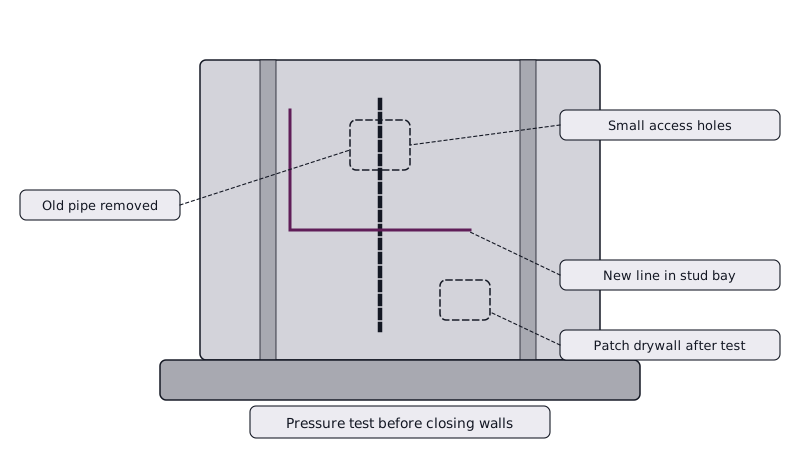
A repipe typically runs new lines from the main out to each fixture, cuts small access holes in drywall, hooks up the water heater and fixtures, pressure tests, and patches. Expect days rather than hours, with the supply shut for stretches. A permit is normally needed, and the work is inspected. The details are at how to repipe a house.
In Murrieta, contact City of Murrieta Building and Safety at 951-461-6062. In unincorporated French Valley and Winchester, Riverside County handles permits, and you should confirm the office before you visit. California generally demands a contractor license once a job needs a permit or its labor and materials reach $1,000; the CSLB site has the rules.
Ask for a written scope, schedule, how the water will be restored each evening, and what happens to your finishes.
How is the cost worked out?
It follows house size, the number of fixtures, access, the pipe chosen, the amount of drywall repair and permit fees. We do not print a dollar figure since no sourced Murrieta number exists. Compare quotes line by line, and see repipe house cost and PEX repipe cost for the factors.
Ask whether finish work, such as painting, is included or separate; many contractors quote the plumbing only. A thorough quote lists everything, so you can compare like with like.
Old galvanized pipe is a separate issue; see galvanized pipe replacement.
How does a request reach a plumber?
The form goes to one nearby plumbing business. The businesses that accept requests pay this site a fee, and the one that receives yours visits, quotes and does the work; this site does not. Phone lines run 9am to 5pm on weekdays. Other jobs are listed on the Murrieta Creek Plumbing home page.
Common questions
Will my house insurance cancel me for polybutylene?
Some insurers add conditions, higher premiums or exclusions for polybutylene, while others do not. Put the question to your agent directly and have the reply written down. A replacement with PEX or copper often removes the issue, which is something to mention to the insurer afterward.
Is all polybutylene the same age?
No. It was sold over a span of years, and different brands, fittings and installers behaved differently from house to house. The material as a whole is treated as suspect, even where the fittings are metal. A plumber can tell what you have.
Is a partial replacement possible?
It is, but partial replacement leaves weak pipe in service, and mixing materials needs the right transition fittings. Most plumbers recommend replacing the whole system, and a staged plan that starts with the most accessible lines is an option if the budget is tight.
How many days will the work last?
That depends on how big the house is and how easy the pipes are to reach, but it is usually days, not hours. Water is off during part of each working day, so get a timetable from the plumber, including when taps come back each evening.
Do I need to move out?
Usually not. Most households stay in the house, though dust from the drywall openings and the hours without running water are an inconvenience. Ask the contractor how the schedule works, then fit showers and laundry around it, or stay elsewhere for a night if that suits you.
Last changed