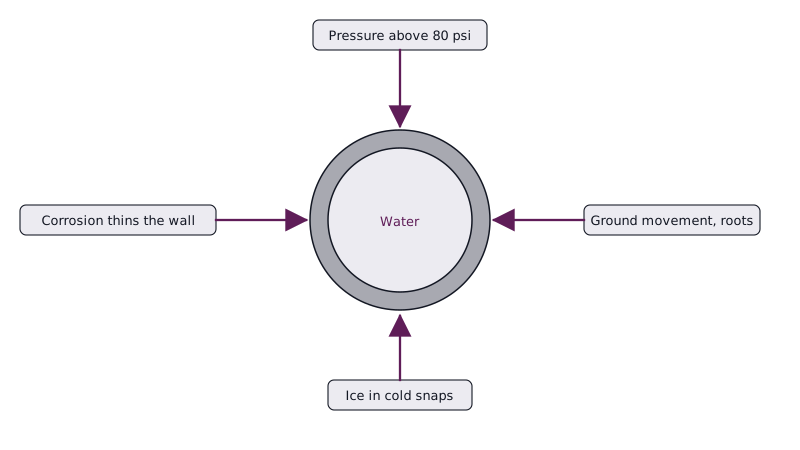
Pipes burst because something pushes harder on the wall of the pipe than the pipe can take, or because the wall has thinned until it gives. The pushes are pressure above the safe limit, ice, ground movement and sudden surges. The thinning is corrosion, scale and age. Murrieta homes see all of them in different mixes, and the fix starts with the cause. The plumber for leaks page covers the repair side.
When a pipe has already let go, close the main shutoff valve first, drain the line through a faucet at a low point of the house, and call for help. This page explains the why, so the next one does not happen. A leak you can see is only part of the story, and the causes below usually mean other weak spots are waiting.
Why does a pipe burst when the pressure is too high?
Pressure over roughly 80 psi, the maximum the California Plumbing Code allows, strains every joint, valve and hose in the house until a weak spot gives way. A faulty pressure regulator lets full supply pressure through. Surges from a fast-closing valve add spikes, which show up as a bang in the wall.
The fix is a gauge and, if needed, a regulator. Our guide on adjusting a regulator shows the check, and water hammer explains the bang.
Pressure damage rarely announces itself. It shortens the life of hoses, supply lines and water heater connections for years before something finally lets go, often at night when the pressure in the system is highest because nobody is using water.
Does old or corroded pipe cause bursts?
Yes. Minerals and water chemistry eat metal pipes away from the inside. Galvanized steel rusts shut and then leaks at threads, and copper can develop pinholes. Some plastic systems of the late 20th century, notably polybutylene, are known for failing at fittings. A pipe can look sound on the outside and be hollow within.
Much of Murrieta is newer, with a median home built around 2000, so age alone is less common than in older cities. Older pockets, which may include parts of Old Town Murrieta and Murrieta Hot Springs, and aging rural properties, are different. Polybutylene is covered in polybutylene pipe replacement, and galvanized pipe replacement deals with galvanized steel.
Hard water leaves scale that narrows pipes and can speed wear on heaters and fittings. Murrieta tap water is usually rated moderately hard to hard.
Is freezing weather a risk to pipes in Murrieta?
Occasionally, yes. When water freezes it expands, and a pipe exposed to a hard frost, in an unheated garage, an attic, a crawl space or a run outside the wall, can split. Winter nights on the valley floor and in rural parts of Winchester and De Luz sometimes reach freezing, so exposed lines deserve insulation.
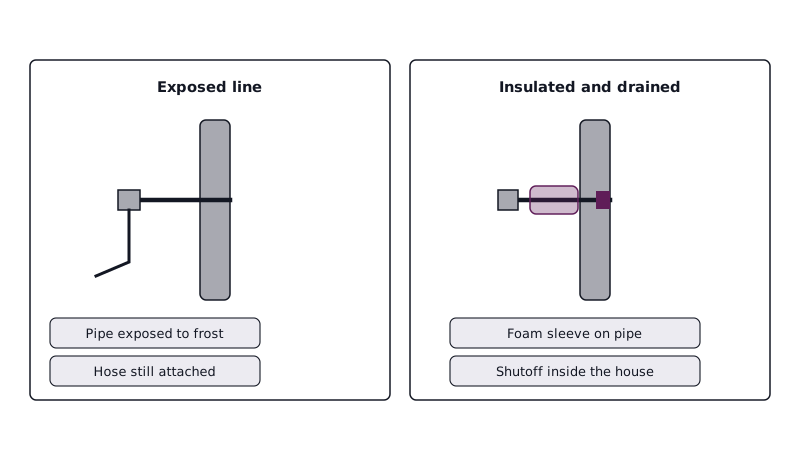
The burst often shows when the ice melts, not when it freezes. Pipe insulation and a drip overnight during a cold snap lower the risk. The steps are listed under burst pipe prevention.
Outdoor hose bibs and irrigation lines are the usual victims. Disconnect hoses before a forecast frost and close any inside shutoff that serves a bib.
Why do pipes burst in summer?
Heat cannot freeze a pipe, yet it pushes up both demand and pressure. Hot ground and sun heat water in exposed lines, thermal expansion pushes against closed fixtures, and heavy irrigation use drops and then spikes pressure. Soil also dries and shifts in summer, and shifting soil stresses buried lines and slab pipes.
A water heater without room to absorb expansion makes it worse. A closed system may call for an expansion tank; it is often fitted, though code does not require it.
Slab leaks and underground breaks rise in dry spells when clay-rich soil contracts. If the yard has a wet patch, one stretch of lawn greener than the rest, or the meter suddenly jumps, read about spotting a burst pipe underground.
Can tree roots or ground movement break a pipe?
Roots find small leaks and grow into joints, splitting clay and old plastic sewer lines more than pressurized supply pipes. Soil movement, from settling, heavy rain or earth tremors, bends and snaps pipes, especially at points where they enter a slab or a wall. Rural lots with large trees and clay soil see more of this.
Murrieta sits in an earthquake region, so shaking can crack lines or pull fittings apart. A visible shift in a wall, a crack in a slab or a sharp fall in water pressure after a quake is a reason to check.
Sewer-line breakages show as gurgling, slow drains and wet ground; supply-line breaks show as low pressure and a running meter.
What else weakens a pipe?
Poor installation does: a kinked line, a bad solder joint, a pipe rubbing against a stud or another pipe, or a mix of metals that corrode each other. Chlorine and chloramine in treated water attack some plastics. Appliance hoses made of rubber, such as washing machine lines, age and burst on their own, no matter how good the house plumbing is.
Water heaters add another route: a failed relief valve or corroded tank is a burst waiting to happen, which is why water heater leaks deserve quick attention.
Not every leak is a burst. A small, steady one wastes a lot over time; EPA figures give the typical household leak as over 9,300 gallons annually. Spotting it early beats a flooded floor.
What do I shut off first if a pipe bursts?
Start with the main water shutoff, usually on the street side of the house, in the garage, or in a meter box. Then open the lowest faucet to empty the lines, and cut the water heater breaker or gas control so the unit cannot run dry. Move belongings clear of the flooding and photograph the damage.
Stay away from wet electrical outlets and panels. When water is close to electrical items, cut power at the breaker only if you can reach it safely and dry. Call for help.
After that, our pages on emergency plumbers for burst pipes, burst water pipes and insurance for burst pipes take over.
Whatever you submit in the form is passed to a nearby plumbing company. This site is paid a fee by the companies that accept requests, and the one that takes yours quotes and does the repair. The Murrieta Creek Plumbing home page lists other jobs we can pass on.
Common questions
Can a pipe burst without warning?
Yes. Pressure and corrosion damage can build quietly, and the failure shows only when the pipe finally gives. Warning signs include stains, damp drywall, a hissing sound, lower pressure and a jump on the meter. A leak detection visit can find weakness before the pipe fails, and the EPA suggests checking the meter with everything off.
Is a bursting pipe always a plumber job?
Stopping the water is yours to do. Mending a supply pipe generally falls to the plumber, especially in walls or slabs. A contractor license is generally required in California when labor and materials come to $1,000 or more, and again whenever a permit is needed. A small, accessible repair is a different matter, but get advice first.
Do burst pipes happen more in older Murrieta homes?
Age adds risk where metal pipes or early plastics remain. Many Murrieta homes date from around 2000 or later, which tends to mean fewer corrosion bursts and more pressure or fitting issues. Older areas near Old Town differ. The plumber can check which pipe is installed and how old it is.
Will a water pressure gauge help prevent bursts?
Yes. A gauge threaded onto an outdoor faucet reads static pressure within a minute. A reading above 80 psi means the regulator needs attention. Check about once a year, and repeat after plumbing work that involved the main line or the regulator.
Does a slab leak count as a burst pipe?
Usually a tiny hole or a crack opens in a pipe under the floor, and it behaves like a slow burst. A warm spot on the floor and a running meter both point to it. See the leak pages for how it is found and fixed.
Last changed