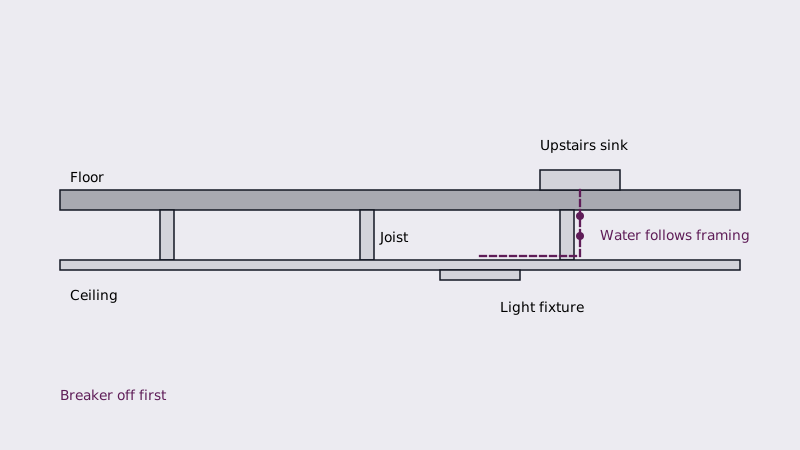
Do not touch the switch or the fixture. Head to the electrical panel and shut off the breaker serving that room. If you cannot tell which breaker it is, switch off the main. Put a bucket under the light and keep out of the wet area. Once the power is off, track down the source with help from leaks and burst pipes.
What is making water drip from my ceiling light?
Along framing and wiring, water travels until it meets an opening, and a light fixture is such an opening. Search above and off to one side for the origin: a bathroom or laundry on the floor overhead, a supply line or drain leaking inside the ceiling cavity, an air conditioner drain, or the roof. The fixture shows where the water emerges, not where it starts.
A leak that happens only in rain points to the roof, the flashing or a vent. Leaks that appear after a shower, a flush or a washing machine cycle point to a fixture upstairs. Leaks that keep dripping with nothing running point to a pressurized supply line. A single-story house gives only the roof, the attic plumbing or the air conditioner as candidates, since nothing sits above except the attic.
Think about what sits over that room. Many homes keep an air handler or supply lines in the attic, so a blocked condensate drain or a weeping joint can send water into a fixture beneath it.
Is it dangerous to have water in a light fixture?
Yes. Water in a live electrical box can cause shock, a short or a fire, and wet drywall may hold water that you cannot see. Cut the circuit before standing near it, never put a ladder under a dripping fixture with the power on, and do not try the switch to see what happens. Sparks, burning smells or a tripped breaker mean you should leave and call 911.
With the breaker off, the risk drops but does not vanish. Wiring can be wet inside the ceiling, and other lights on the same circuit may share the box. Before restoring power, have a qualified electrician check any wiring that got wet. Children and pets should stay out of the room.
Bathrooms and kitchens are another place where water and electricity meet, through outlets and fans. Treat water coming through a fan or an outlet cover the same way.
What can you do to hold back the water until help comes?
Place a bucket or a trash can under the drip, put a tarp or towels on the floor, and move furniture away. If the ceiling is bulging, puncture the lowest point of the bulge with a screwdriver, standing to the side, to let the water out in a controlled stream into the bucket. A bulging ceiling can collapse suddenly.
Never stand under it while you do this. Open a wall switch cover or a nearby fixture only when the power is off and you feel comfortable doing so. Record the date and the stained area in photos and a short video for the insurer. Should a pipe be the source, close the main water valve too, and open a faucet downstairs to drain the lines.
How do you work out which pipe is leaking?
Run each fixture above the stain one at a time, flush the toilet and run the shower, and watch the ceiling for a few minutes after each. If the water stops when you shut the main, it is a supply line or a fixture. If it only drips during use, it is a drain or a shower pan. If it flows after rain only, it is the roof.
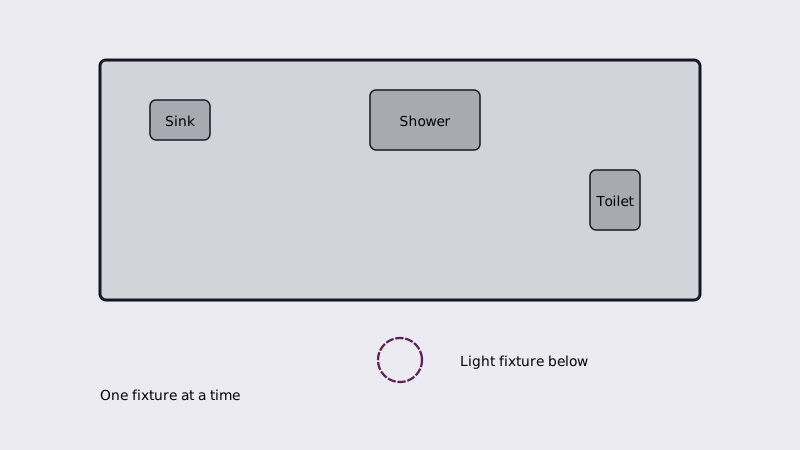
Try this simple sequence with someone upstairs. Ask them to run the bathroom sink, wait three minutes, then run the shower, wait, then flush. A drip that follows one action names the culprit. The meter test helps too: with all water off, a moving meter means a supply leak somewhere in the house.
A plumber uses moisture meters, thermal cameras and sometimes a small inspection hole, so the repair opens a small spot, not the whole ceiling. Clues are collected in ceiling water leak, ceiling leak warning signs and ceiling stains with no active leak.
Should you remove the light fixture?
Not while it is wet, and not until you have verified that the power is off. Water can pool inside a fixture's glass dome. Once the breaker is off and a non-contact tester shows no power, take off the dome or cover and drain it. If the fixture is soaked, an electrician should check it before reuse.
Never use a shop vacuum on a fixture still wired in. Keep any dripping insulation or drywall in a bag so the plumber can see where the damage ended. If the drywall is soft and sagging, it needs to come out, because wet insulation holds moisture against framing and breeds mold.
Should an electrician or a plumber be your first call?
If a pipe is the source, ring a plumber first, since the water has to be stopped before anything else, and then an electrician to check and dry the wiring. For a leak that appears only in rain, the roofer is who you want. With an unknown source, begin with a plumber who does leak detection, since most indoor leaks are plumbing.
In practice, you may need two trades. The plumber fixes the pipe, the electrician checks the circuit, and a drywall repairer closes the ceiling. Ask each what they will leave open and who finishes the surface. Keep receipts together for the insurance claim.
For a leak behind a light, the plumber may need to open drywall around it. Read leak detection costs and fixing leaking water pipes if you want to know what that involves.
Will insurance cover it?
Homeowners policies often cover sudden water damage, for instance a burst supply line, but they usually exclude long-term seepage and the cost of fixing the pipe itself. Policies differ, so phone your insurer early, photograph the damage before cleaning up, and hold on to wet materials until the adjuster says otherwise.
Do not sign away rights or begin major demolition before talking to them, but do act to prevent more damage, for example by stopping the water and drying out the space. The usual pattern is described in if insurance pays for a burst pipe.
What stops this from happening again?
Fix the cause, then dry the space completely. Replace the soaked insulation and drywall, check for mold, and ask the electrician to test the circuit. Inspect supply lines, shower pans, caulk and air conditioner drains upstairs once a year, and keep a water sensor in the attic or above the bathroom ceiling.
A hose, a clogged drain pan or an old washing machine valve is often the quiet culprit. Replace them on a schedule. If the leak came from high pressure, have the regulator checked, since a repeat is likely otherwise.
We arrange the visit and do not do the plumbing. The local business that comes to you quotes the work, and it pays us a fee for the request. Begin on the price request page. The Murrieta Creek Plumbing home page lists our other jobs.
Common questions
Can I leave the light on if only a little water drips?
No. Turn the breaker off. Even a small drip can reach wiring, and a light left on is a shock and fire risk. Wait until a plumber has found the source, an electrician has checked the circuit and the fixture has dried before turning power back on.
Why does the light leak only when it rains?
Rain-only leaks usually come from the roof, flashing, a vent or a skylight, and the water travels along the framing to the fixture. A roofer or a roof inspection is the right call. If it also leaks in dry weather, the plumbing or the air conditioner drain is a better suspect.
Can an air conditioner cause a ceiling light to leak?
Yes. An air handler in the attic has a condensate drain and a drain pan, and when they clog or overflow the water can run down to a light. Check for a wet pan or a stained drain line. An HVAC contractor handles that, not a plumber, though a plumber can tell you it is not a pipe.
How long can a ceiling stay wet before mold grows?
On damp material mold can begin within a day or two, and it grows fastest on drywall and paper. Use fans and a dehumidifier to dry the area, and take out soaked insulation quickly. Large or old wet areas need professional drying, and a person with health issues should stay out.
Should I cut the drywall myself?
One small relief cut to drain a bulge is reasonable provided the power is off and you stand clear. Larger demolition risks hidden wires and pipes, and may affect your insurance claim. Let the plumber and the adjuster see the damage first, and take photos before and after.
References
Last changed