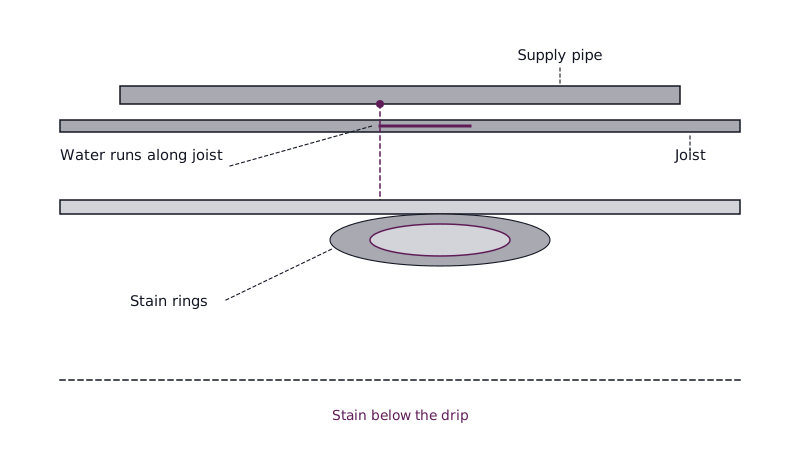
The earliest signs are small: a faint tan or brown stain, bubbling or peeling paint, a patch that feels cool or soft, or a musty smell in one room. Drips and sagging come later. If you notice any of these, track down the source before the ceiling fails. Our guide to plumbers for leaks explains what happens once you do.
What does a ceiling look like when it is leaking?
Look for yellow, tan or brown rings, often with a darker edge, paint blistering or flaking, drywall tape that shows through, hairline cracks that follow a seam, and a slight bulge. Stains with a ring pattern mean water has dried and returned several times, which signals a recurring leak, not a one-off spill.
Shine a flashlight along the ceiling at a low angle in a dark room. The light shows ripples and bulges that the room light hides. Press gently with a finger: soft or cool drywall is holding water. Check around fixtures, vents, corners and the walls just below, because water travels along framing before it surfaces.
A stain that grows after rain is a roof sign. One that grows after a shower or washing machine cycle is a plumbing sign. One that grows on hot afternoons may be an air conditioner condensate problem, since cold lines sweat in the attic.
What are the sounds and smells of a leaking ceiling?
Listen at night when the house is quiet. A steady drip, a faint hiss or running water while nothing is on points to a leak in a pressurized pipe. A burst pipe makes a louder rushing or spraying noise along with a sudden pressure drop. A musty, earthy smell with no visible stain suggests moisture behind the paint.
Pinging, tapping or banging in the pipes when taps close is a different problem, water hammer, but it can stress joints over time; see water hammer. A sewer smell near a ceiling or bathroom is more likely a dry trap or a drain joint than a supply leak.
If you hear running water and the meter spins with everything off, the leak is pressurized. Shut the main valve, then call.
How do I tell whether the ceiling leak is from plumbing or the roof?
Start with timing. Plumbing leaks follow water use, show up in any weather and may drip steadily. Roof leaks follow rain, wind or a recent storm and stop once things dry. A stain under a bathroom, kitchen or laundry suggests plumbing, while a stain under a vent, chimney or the roof edge suggests the roof.
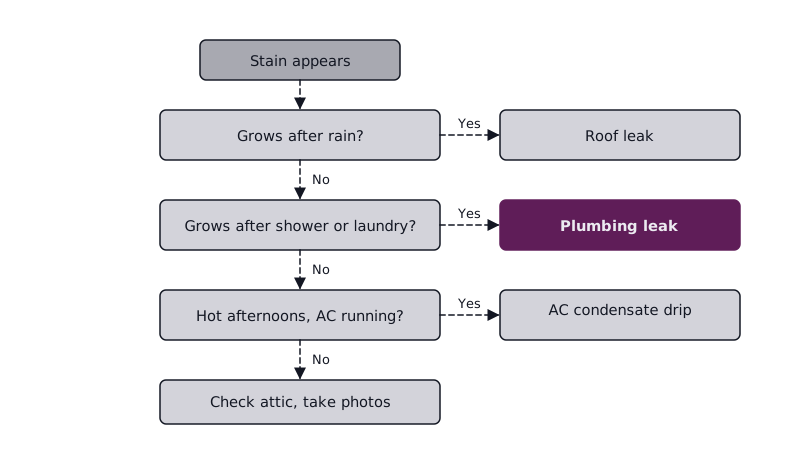
Inspect the attic when it is safe to reach: look for wet insulation, dark wood, rust on nails and drip trails, and see whether the damp area lines up with a pipe, a vent stack or a roof penetration. Take photos. A hose, a bathroom fan duct dumping condensation, and an air conditioner pan can fool you.
Many leaks are not what they seem. Condensation and old stains are covered under ceiling water spots when nothing is leaking, while the repair side is in ceiling water leak.
Why does water leak through a ceiling?
Common causes include a supply or drain pipe leaking overhead, a shower pan or tub seal that has failed upstairs, an overflowing appliance, a blocked air conditioner drain, and a roof leak. Pipes give out through age, high pressure, corrosion, poor fittings and, in cold snaps, freezing.
Supply lines in many houses pass through the attic or between floors, and high water pressure is one of the quieter culprits. Under California's plumbing code the pressure limit is 80 psi, though a failed regulator can send the figure higher. Hard water adds scale and corrosion; third-party estimates commonly describe Murrieta tap water as moderately hard to hard, so check your district's report. Fittings made by pushing and crimping can fail if poorly installed.
What causes pinhole leaks in copper pipe?
Pinholes form where the pipe wall wears through from the inside or outside. Causes include water chemistry, high velocity, high pressure, tiny flaws in the pipe, contact with other metals and acidic flux or soils on the outside. One pinhole often means others are on the way, since the whole run has had the same conditions.
When a pinhole turns up in the attic or inside a wall, stop the water, dry the pipe and clamp it until a plumber can look. See pinhole leak repair in copper pipe and repiping a house when the leaks keep coming.
Why is the water bill high with no leak in sight?
Hidden leaks are the usual reason. A toilet flapper, an irrigation line, a slab leak or a pipe inside a wall can run for weeks. Check the meter with all water off; if it moves, water is escaping. By the EPA's numbers, leaks cost the average home more than 9,300 gallons annually.
Other reasons include seasonal irrigation, a new appliance, houseguests and a rate change. Read the bill for the usage period and compare it with the same months last year. The steps are explained in an unexplained high water bill.
How does a burst pipe look and sound, indoors or out?
Indoors you hear rushing or spraying and see water pouring from a wall or ceiling. Outdoors, look for a wet patch or pooling in the yard without rain, a green strip in dry ground, a pressure drop and a meter that runs when everything is off. A burst usually calls for closing the main at once.
Underground bursts can show as soft soil, mud by the foundation, or water seeping up along the street-facing wall. For those, read spotting an underground pipe burst; the indoor version is covered in recognising a burst pipe.
What are the next steps once you spot the signs?
Stop the water if it is dripping, keep power off near the wet area, catch water in buckets, photograph the damage, and look for the source. If a few minutes of searching turns up nothing, call a plumber who does leak detection. Do not paint over a stain, since that hides evidence and traps moisture.
For a bulging ceiling, release it through one small hole at its lowest spot while standing clear and keeping electricity off. A wet light fixture is dealt with in leaks through a ceiling light. Call your insurer early.
Your request goes to a local business that visits and quotes the work, and such businesses pay us a fee for taking requests. Begin on the price request page. Other jobs we handle are on the Murrieta Creek Plumbing home page.
Common questions
How fast does a ceiling leak spread?
It depends on the flow. A pressurized supply leak can soak a ceiling in hours, while a slow drain or condensation leak may take weeks to show a stain. Water spreads sideways along framing, so the stain may be far from the source. Treat any growing stain as active.
Can a stain mean the leak has already stopped?
Yes, a dry, old stain can be left over from a past leak. Outline its edge in pencil and recheck it over a few days and after rain or heavy water use. If it grows or feels damp, the leak is active. Old stains still deserve a look in case it returns.
Is a ceiling leak always a plumbing problem?
No. Roofs, vents, air conditioners, skylights and condensation all cause ceiling stains. A plumber can tell you quickly whether the water is coming from pipes, and will say so honestly if it is not. The pattern with rain, showers or the air conditioner running is your best clue before anyone arrives.
How do I know if mold is growing?
A musty smell, dark speckled spots or a stain that returns after cleaning can mean mold. Wet drywall can grow it within a day or two. Dry the area quickly, remove soaked material, and if the patch is large or you have health concerns, ask a professional to assess it.
Should I paint over the stain?
Not until the cause is fixed and the area is dry. Paint hides evidence and traps moisture. After repair, use a stain-blocking primer on dry, sound drywall and then repaint. A drywall repair trade usually closes the opening the plumber made.
References
Last changed