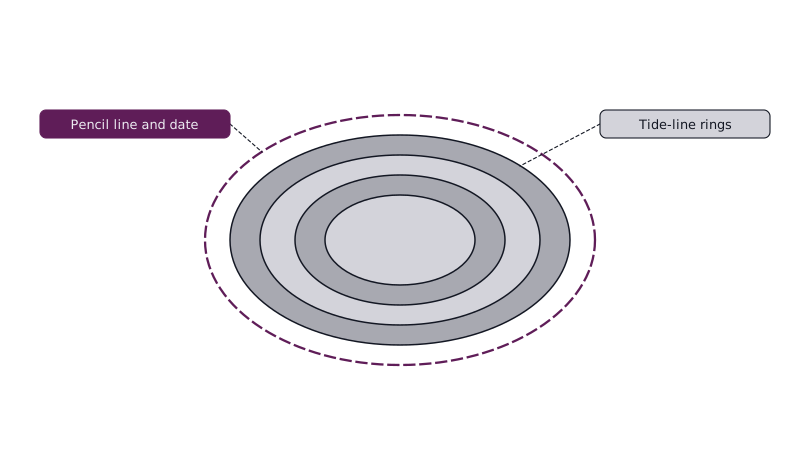
A dry stain can be left over from a leak that was fixed, a single roof drip, or condensation that has ended. A wet or growing one means an active source, often a slow pipe leak, an air conditioner drain fault or a roof flaw. Press the spot, watch it for a week and read the water meter, and most cases sort themselves out before anyone is called. For active stains, use the guide on leaks and burst pipes.
How can you tell an old ceiling stain from an active one?
Touch the stain with a dry finger. A patch that feels cool, damp, soft or bulging is active, while a dry, hard, flat stain is old. Trace the outline in pencil, add the date, and check again after the next rain or after running the shower upstairs. A ring that widens or darkens shows moisture is still arriving.
A more careful check:
- Look for a tide-line edge: a series of rings means the area has wetted repeatedly.
- Smell the spot. A musty smell suggests ongoing damp.
- Shine a light along the surface. Peeling paint, a sag or a blister is the first sign of a recent wetting.
- Take a photo each week from the same spot so changes are easy to see.
A moisture meter, sold at hardware stores, reads damp drywall without cutting it. A plumber or inspector may use a thermal camera for hidden leaks.
Keep out of the room if the ceiling sags or bulges with water. Leave light fixtures and switches near a wet ceiling alone. Wet drywall can fall, and water can reach wiring.
When do you need a leak detection visit?
Book one if the stain comes back after you dry and paint it, if the source is unclear, or if the meter keeps moving although every tap and appliance is off. A plumber can find the spot with moisture meters, thermal cameras and pressure tests, without tearing out the ceiling. The leak detection cost guide explains what it costs.
Send a quote request saying where the stain is, how long you have seen it, and what the meter did. We pass it to local plumbing businesses that pay this site a fee for introductions, and the one that replies prices and does the work. If a bill worries you more than a stain, read about a high water bill without a visible leak. The home page lists other services.
Could it be a slow pipe leak or a burst pipe?
Yes. A pinhole in a water supply pipe, or a loose connection above the ceiling, can dampen the drywall slowly, so the stain appears with no visible drip. A stain under a bathroom, kitchen or laundry room is a strong clue. A stain that grows at the same time as an unexplained rise in the water bill is another.
Run the meter test. Turn off every water-using appliance, record the meter dial or low-flow indicator, and look again thirty minutes later. Any movement means water is going somewhere. If the dial moves, shut the main valve and phone a plumber. A burst pipe shows more dramatic signs, described in signs that a pipe has burst.
Connections and fixtures leak regardless of a home's age or pipe material, and older homes in any neighborhood may add worn piping to the list. Hard water, which is moderately hard to hard in third-party estimates for Murrieta, can also wear small fittings. Check your district's report for your address.
What causes ceiling stains when no pipe is leaking?
Condensation, roof leaks that only show in rain, an overflowing AC drain pan, a leaking bath fan duct and past leaks that dried all make stains without a current pipe problem. Murrieta's hot summers put heavy loads on air conditioning, so a clogged condensate line is a common cause in attics.
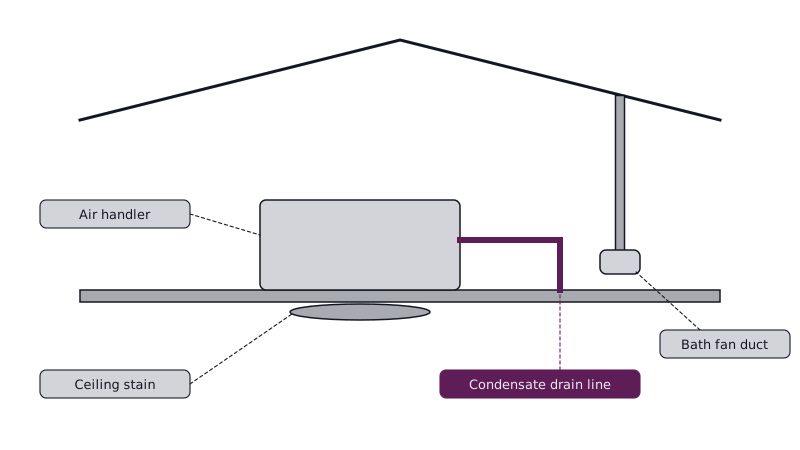
Detail on each:
- Condensation. Cold supply pipes or ductwork in a hot attic sweat, and the drips stain the ceiling below. Wrapping the pipe or insulating the duct helps.
- AC drain trouble. The condensate line or pan overflows when it clogs, and the stain appears below the air handler.
- Roof leaks. These appear after rain and may vanish for weeks between storms, so a roof stain can sit unnoticed for a long time.
- Bath fan duct. A duct that is disconnected or has no slope sends moist air into the attic, where it condenses.
- Old leaks. A dry stain from a repaired pipe or a roof that was replaced never goes away until painted.
More patterns are described in the pages on ceiling leak warning signs and a leak around a ceiling light.
What should you do next?
Dry the area, take dated photos, and monitor for a week. Check the roof and the AC unit, test the meter, and open the attic when you can get to it safely. If the stain grows, the meter moves, or the ceiling softens, book a plumber and, for roofs or air conditioning, the matching trade.
Fixing it matters. Wet drywall grows mold and loses strength, and a small leak becomes a large repair. Paint over a stain only after it has stayed dry, and use stain-blocking primer. Otherwise the brown comes back through the paint.
Insurance: take photos before any repair, and read your policy for sudden versus slow leak rules. This site cannot advise on claims.
Common questions
Can a ceiling stain be from the AC and not a pipe?
Yes, often. A clogged condensate line, a rusted drain pan or a poorly insulated duct leaves rings below the air handler. If the stain sits near an attic unit or a duct run, check that first. Call a heating and cooling business for the unit, not a plumber, unless the drain line is the plumbing kind.
How long can I wait before it becomes a problem?
A dry stain that is not growing can be watched for a week or two. A wet, soft or spreading one needs attention within days, since moisture feeds mold and weakens drywall. A sagging ceiling calls for action that day: close the water if a pipe is suspected, and stay out from under it.
Will painting over the stain fix it?
Only if the cause is gone. Seal old stains with a stain-blocking primer first, then paint. Painting over a stain that is still being wetted will fail within weeks, because the moisture pushes through. Wait until the area has stayed dry for a period you can confirm.
Is a stain with no drip still a leak?
It can be. A slow leak that dampens drywall without ever dripping is still a leak, and because the damage stays hidden it often costs more later. Treat any stain that grows or darkens as a leak until the meter test and an inspection show otherwise.
References
- General home plumbing and building practice; no price figures on this page
Last changed